

FREE downloadable resources
Visit our Resources section
Tread Safely
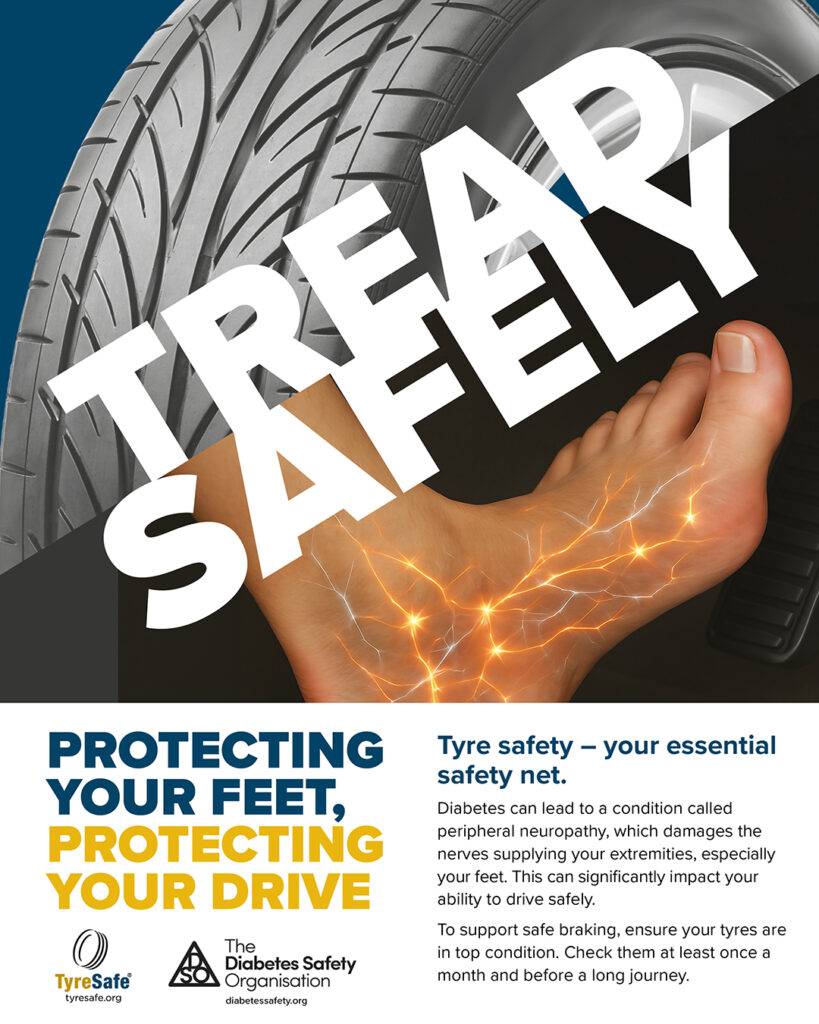
TyreSafe and the Diabetes Safety Organisation (DSO) have launched a powerful new partnership to tackle a hidden but significant road safety risk – the impact of diabetes on driving.
The ‘Tread Safely’ campaign raises awareness of how diabetic peripheral neuropathy (DPN) – a common complication of diabetes – can impair driving ability, and why maintaining safe, legal tyres is even more critical for those affected.
Together, TyreSafe and DSO are calling on individuals and employers to take action and ensure vehicles are in roadworthy condition, helping reduce the risk of preventable incidents.
Why Diabetes Poses a Driving Risk
Many drivers, especially those who drive for work, are unaware of how diabetes can affect their ability to control a vehicle. DPN can cause:
- Reduced Sensation – Loss of feeling in the feet and legs can make it harder to feel the pedals and respond quickly.
- Impaired Muscle Function – Weakness in the foot and ankle muscles can hinder control over the vehicle.
- Altered Pedal Control – Research shows drivers with DPN often use pedals less precisely, increasing the chance of incorrect or delayed braking.
When combined with underinflated, worn, or damaged tyres, these challenges can severely impact stopping distances and reaction times, putting drivers and other road users at greater risk.

The Role of Tyres in Managing Risk
Tyres are the only point of contact between a vehicle and the road – and their condition is critical to safe braking and handling, especially when a driver’s reflexes or control are compromised.
The ‘Tread Safely’ campaign promotes the importance of checking:
- Air Pressure
- Condition
- Tread Depth
These core checks form TyreSafe’s ACT message and are even more vital for drivers with diabetes or DPN. By combining practical tyre safety guidance with DSO’s expertise on diabetes and driving, the campaign empowers drivers to reduce their risk and stay safe.