
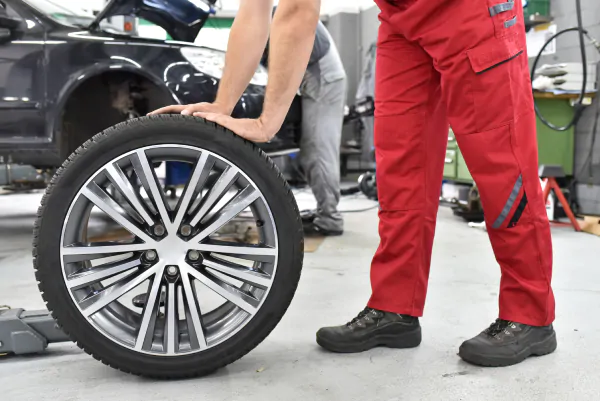
How to care for your tyres
You can’t always prevent tyre emergencies, but a proper tyre care and maintenance routine will ensure your tyres are in the best condition possible before hitting the road.
You should regularly check each tyre’s pressure, tread depth and condition. It is advisable to do this every month and before long journeys.
Maintaining the correct tyre pressure is essential. You can check your tyre pressure by using your Tyre Pressure Monitoring System or by heading to a local petrol station with an air machine. You’ll find your tyres optimal pressure in the manufacturers handbook. A low tyre pressure can affect handling and grip and will use more fuel. Driving with under-inflated tyres can also increase the risk of a blowout, especially on high speed motorways.
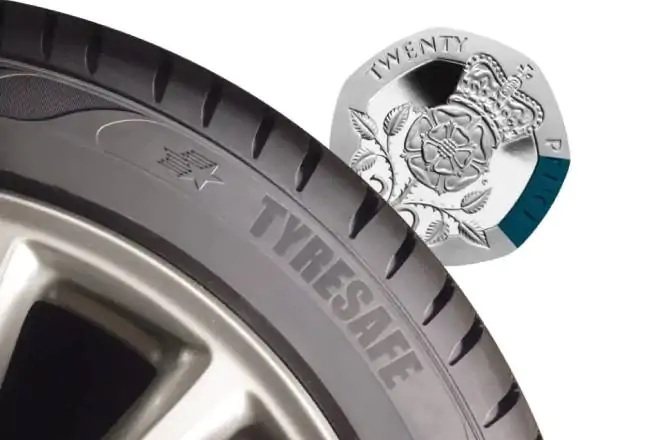
It is also important to routinely check your tread depth. The 20p test is a great way to assess whether your tyres meet the legal requirements. Tyres with a low tread depth are more susceptible to aquaplaning as they are less able to grip the road surface and channel surface water away.
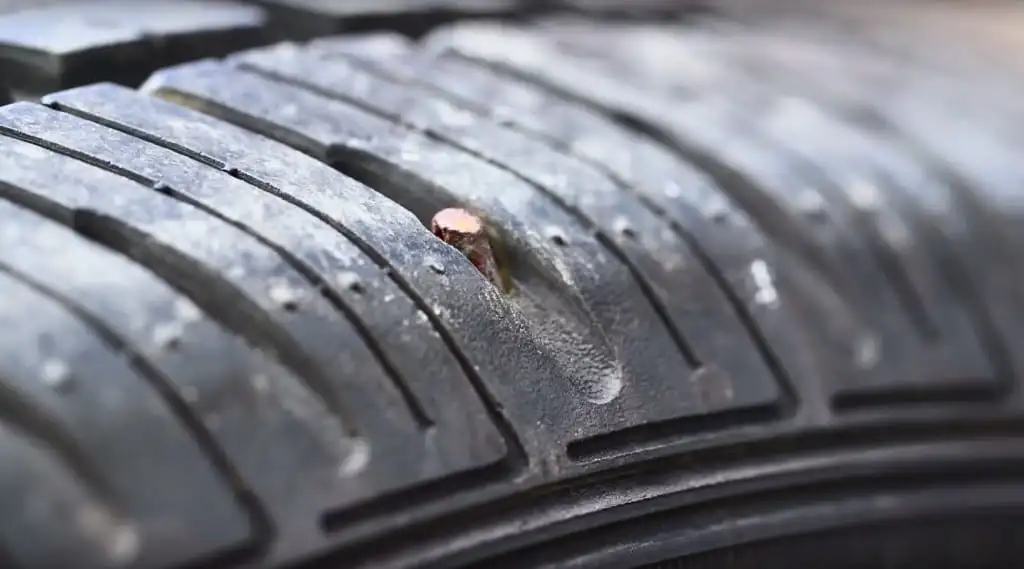
Lastly, you should check the condition of your tyres. You can do this by examining the surface of your tyres, looking for any signs of damage like lumps, bumps or embedded objects.
Managing tyre emergencies
Even with proper tyre care, emergencies happen!
How you manage a tyre emergency will depend on the type of damage and the vehicle you have. Drivers with older cars may be able to switch to a full-sized spare wheel and tyre, while motorists with newer vehicles may need to rely on space saver wheels and emergency puncture repair kits.
Here, we’ve outlined some of the key actions you might take in a tyre emergency, along with helpful advice to guide you through the situation.
Handling a puncture
Punctures can be potentially dangerous. If your tyre gets a puncture what should you do?
It may be possible to continue with your journey by replacing your tyre with a spare or space saver wheel, or by using a temporary puncture repair kit (if safe to do so). These are only temporary measures, however, and you should get a professional to replace your damaged tyre with a standard sized tyre as soon as possible.
Slow punctures are a little different. It may take days or possibly weeks to realise that your tyre has a slow puncture. The best way to avoid the potential issues associated with them is to regularly check. But there are tell-tale signs you can look out for while driving:
- Your car might noticeably pull or drift to one side
- The steering wheel may vibrate more than usual
- The handling might feel off – with steering feeling more sluggish or sensitive than normal.
Once you know you have a slow puncture, you should take your car to a tyre specialist as soon as you can. They will be able to either repair it or assess whether a new tyre is needed.

Switching to a spare tyre
Hopefully only a few of us will have to drive on a spare tyre – but in such an eventuality you should know what to do.
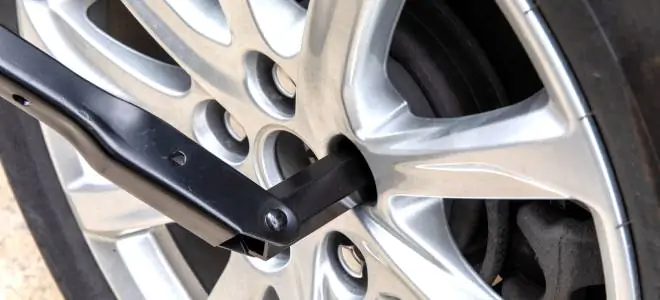
When you change your tyre you should make sure you have the correct equipment on hand and that you are parked on a hard, flat, even surface.
If you are on the roadside, you should wear a reflective jacket, place your warning triangle, turn on your hazard lights, and ensure that all passengers have left the vehicle.
It is important to remember that for front wheel drive cars, if one of your front tyres is punctured, you should move the rear tyre on the same side to the front and fit the spare to the rear. This is for safety reasons.
Driving with a space saver wheel
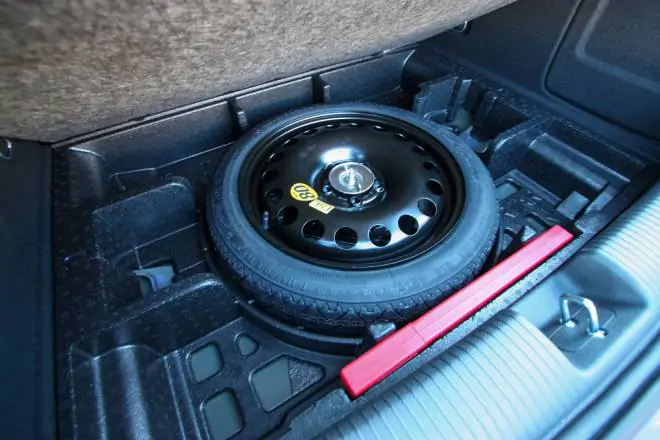
Older vehicles may have a space saver wheel, which can be used in the event of a puncture. Space saver wheels are smaller and thinner than your car’s regular tyres and should only be used to drive to a professional garage so that a regular tyre can be fitted.
It is recommended that you should drive for no more than 50 miles on a space saver wheel, and keep below a maximum speed of 50 mph. This is because a space saver is not designed to permanently replace the original wheel and tyre – it is a temporary ‘emergency’ solution to allow you to drive to a tyre fitting outlet.
The same basic rules apply to changing your space saver wheel as making emergency puncture repairs. You should find a safe place on the road away from moving traffic, all your passengers should leave the car, and you should switch on your hazard warning lights. A flat surface should be found to fit your space saver wheel.
Remember: it is unsafe to change a tyre on the hard shoulder of a motorway or dual carriageway. Exit the vehicle on the passenger side and call your breakdown recovery service.
Using emergency puncture repairs
Many modern vehicles do not have space saver wheels. Instead, they are supplied with emergency puncture repair kits, which can be used to repair tyres temporarily and allow you to continue on your journey until a proper repair can take place.
There are definite benefits to emergency puncture repair kits. They are considerably smaller than a space saver wheel and offer a temporary fix in four out of five punctures. The car does not need to be jacked up. But puncture repair kits should only be used if it is safe to do so.
It should be remembered that using an emergency tyre puncture repair kit should only ever be a temporary measure. As soon as it is safe to do so you should get the tyre replaced by a professional.
Stay safe and road-ready with TyreSafe
Stay safe and road-ready with TyreSafe.
We can answer many of your tyre care and maintenance questions – such as how to use an emergency repair kit, if tyre valves need to be replaced, and what to do if your car gets a slow puncture.