
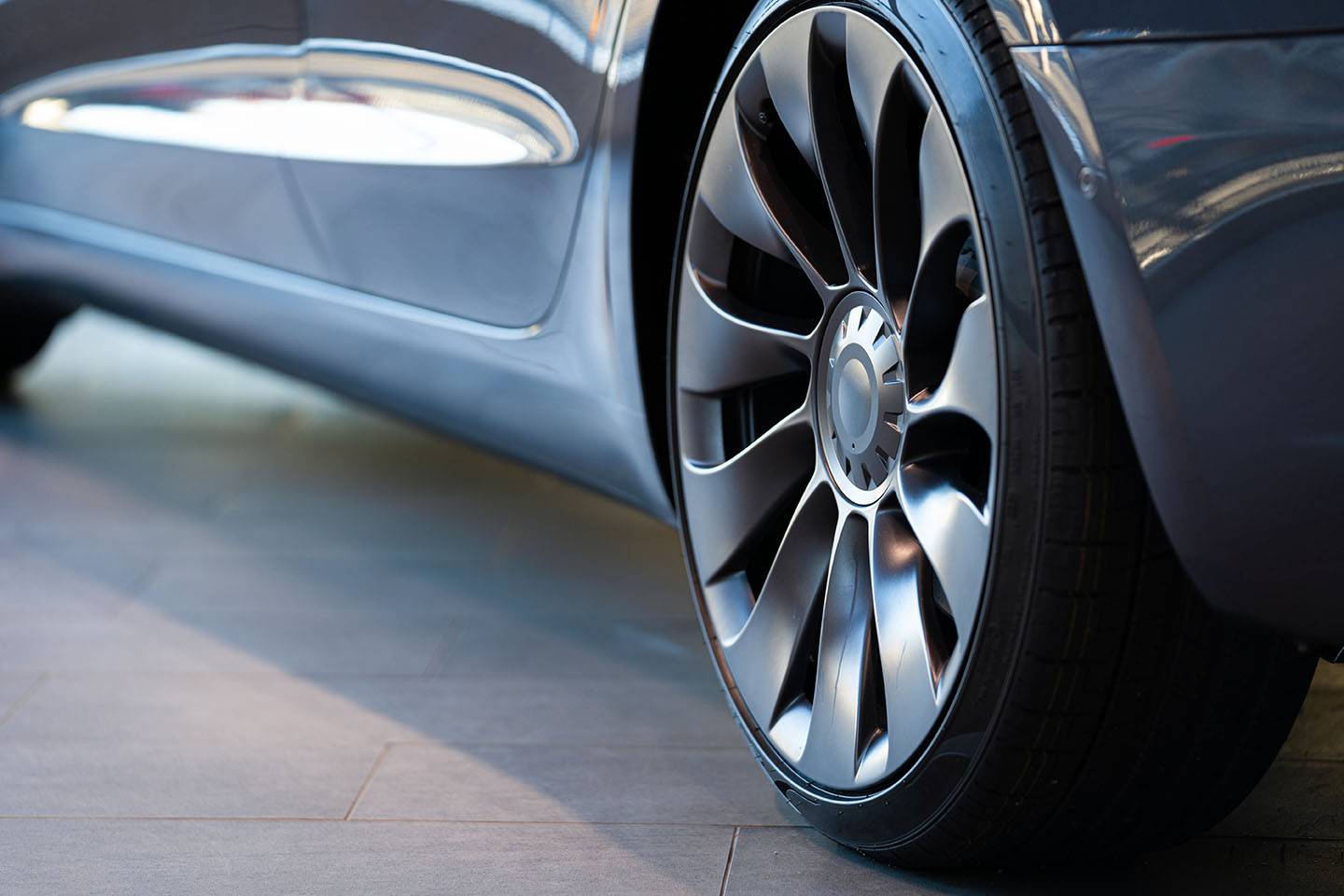
Electric vehicle tyres
Electric cars need more tyre attention, not less. TyreSafe’s analysis of DVSA MOT data found that, compared with petrol cars of the same age and mileage, electric cars were 1.5 times as likely to have a dangerous tyre defect at their MOT.
That doesn’t make electric cars unsafe. It means their tyres need checking regularly, not just once a year at the MOT. This page explains what the data shows, what to check, and what fleet managers should build into their policies.
What the MOT data shows
TyreSafe analysed DVSA MOT results for cars tested in 2024 and 2025, comparing electric, petrol, diesel and hybrid cars of the same age and annual mileage.
- 1.5 times the petrol rate. Electric cars had 1.5 times the petrol rate of dangerous tyre defects, in both years. Hybrids were slightly below petrol and diesel about level, so this isn’t simply about newer cars.
- More than 33,000 electric cars had a dangerous tyre defect at their MOT in 2025.
- One in 14 high-mileage EVs at their first MOT. Among cars that had covered 36,000 miles or more by their first MOT, about one in 14 electric cars had a dangerous tyre defect, against one in 24 petrol cars.
- A clean MOT isn’t a clean bill of health. Electric cars that passed with no tyre advisory were 1.5 times as likely as comparable petrol cars to have a dangerous tyre defect a year later.
- Most dangerous tyres give no warning. For every fuel type, most dangerous tyre defects found at the MOT had no tyre advisory at the previous year’s test. Among cars up to seven years old, it was around two in three.
Results vary widely between models. High-torque, performance-oriented cars, electric and petrol alike, had the highest rates, while several heavy electric models were below petrol. Whatever you drive, regular checks are what keep tyres safe.
These findings are consistent with the BVRLA’s September 2026 report on used electric vehicles. It found electric cars hold up as well as or better than petrol cars at the MOT overall, but with about 1.8 times as many tyre defects.
Check your tyres every month: ACT
Check your tyres at least once a month and before long journeys. It takes a few minutes. Remember ACT: Air pressure, Condition and Tread.
A – Air pressure
- Check pressures when the tyres are cold, before you’ve driven far.
- Use the pressures in your vehicle handbook or on the label inside the door frame, and adjust for heavy loads where the handbook says so.
- A tyre pressure warning light means pressure has already dropped. It doesn’t replace a check with a gauge.
C – Condition
- Look across the full width of the tread and on both sidewalls for cuts, bulges, exposed cords and objects stuck in the tyre.
- Uneven wear, or a car that pulls to one side, can mean the wheels need aligning.
- Check the tyre’s age from the four-digit date code on the sidewall. “2419” means week 24 of 2019. Have older tyres inspected by a professional.
T – Tread
- The legal minimum for cars is 1.6mm across the central three-quarters of the tread, all the way around the tyre.
- Don’t wait for the legal limit. Research for Halfords by Cardiff University (2026) found a car on tyres worn to 1.6mm needs about 27 metres more to stop from 70mph in the wet than one on good tyres.
Choosing replacement tyres
- Match the vehicle manufacturer’s specification, including size, load index and speed rating. Many electric cars are specified with reinforced (XL) or high-load (HL) tyres, and replacements must meet that rating.
- Look at the tyre label. It grades rolling resistance, wet grip and external noise. Better rolling resistance helps range; better wet grip helps stopping.
- Tyres marketed for EVs can suit electric cars well, but meeting the manufacturer’s specification matters most.
Wheel alignment and wheel security
- Have the alignment checked after hitting a pothole or kerb, or if you notice uneven wear or pulling. Misalignment wears tyres faster.
- Whenever a wheel is removed, make sure the nuts or bolts are tightened to the manufacturer’s torque setting and re-checked as the fitter advises.
For fleet managers
Most new electric cars join the road as company, leased or salary-sacrifice cars. In Great Britain a car’s first MOT is at three years, often at or after the end of the lease. Until then, tyre safety depends on checks by the driver, the fleet and the service schedule.
TyreSafe advises fleets running electric cars to:
- Write monthly ACT checks into company car and salary-sacrifice policies, with a simple way for drivers to record them.
- Give Condition extra attention. Drivers should check for cuts, bulges and exposed cords across the full tread width and both sidewalls.
- Treat every tyre advisory as a job to book, not a note on a certificate.
- Don’t wait for the MOT. For most leased cars it doesn’t come until year three.
- Fit replacement tyres that meet the vehicle manufacturer’s specification, including load rating.
For policy templates and more guidance, see our fleet tyre management guidance and fleet resource hub.
Frequently asked questions
Do electric cars wear out tyres faster? As a group, electric cars had more dangerous tyre defects at the MOT than petrol cars of the same age and mileage. But results vary widely between models, and some heavy electric cars did better than petrol. How a car is specified, driven and maintained all play a part.
How often should I check my tyres? At least once a month and before long journeys, using ACT: Air pressure, Condition and Tread.
Do I need special tyres for an electric car? You need tyres that meet your vehicle manufacturer’s specification, including load index and speed rating. Your handbook, or a tyre professional, can tell you what that is.
Does a clean MOT mean my tyres are fine for the year? No. Most dangerous tyre defects found at the MOT had no warning at the previous test, and electric cars with a clean MOT were 1.5 times as likely as comparable petrol cars to have a dangerous tyre defect a year later.
Do electric car tyres crack or perish more? No. Allowing for age and mileage, electric cars were less likely than petrol cars to have a cracking or perishing advisory. Cracking is mainly an issue for older, low-mileage cars of every fuel type.
About the figures
TyreSafe analysed DVSA’s anonymised MOT data for 2024 and 2025: initial tests of cars, excluding vans, pick-ups and London taxis. Comparisons are with petrol cars of the same age and annual mileage. The figures show an association, not a cause. Brand-level results are not published.