

Got a flat tyre? We’ve all been there. You’re driving along when suddenly, thud, you hit a nail. Before you know it, you’re stranded at the side of the road, either waiting for help, using an emergency repair kit, or changing the tyre yourself.
There’s nothing quite like the sinking feeling of a flat tyre. But with the rise of puncture-proof car tyres, are punctures a thing of the past?
In this handy guide, we’ll tell you what puncture-less car tyres are, explain how they work and outline the different types available on the market.
What are puncture-proof car tyres?
Despite the name, puncture-proof tyres are not actually puncture-proof – they are puncture-resistant. In fact, puncture-proof tyres can still be pierced by sharp objects. But, unlike traditional tyres, they won’t lose pressure when this happens, which means that you can continue your journey without interruption.
There are also tyres that don’t rely on air at all, making them immune to punctures in the traditional sense – they won’t lose air pressure! But they can still suffer damage as a result of sharp objects.
How do puncture-less car tyres work?
Unlike traditional tyres that rely on air pressure to maintain their shape and structure, puncture-proof tyres are made with materials that prevent them from going flat and interrupting your journey. Different manufacturers and types of tyres use different technologies to achieve this.
Some puncture-proof tyres feature materials like steel belts, Kelvar, polyester, and rubber compounds to reinforce the sidewalls with additional layers that increase the tyre’s strength and durability. Others use sealing materials that automatically repair punctures upon impact. Some tyres are also designed with unique honeycomb or web-like structures that don’t rely on air pressure at all.
Types of puncture-resistant car tyres
There are a few different types of puncture-resistant car tyres on the market at the moment.
Run-flat tyres
Run-flat tyres are designed with reinforced sidewalls so that, in the event of a puncture, you can continue your journey for a limited time. This removes the need for a spare tyre, making your vehicle lighter and more fuel-efficient.
Generally speaking, you can continue to drive up to 50mph for up to 50 miles on a run-flat tyre after a puncture has occurred. You should use this time to head to a tyre specialist. Due to the stress placed on the tyre’s structure after damage, run-flat tyres cannot be repaired, so you’ll need to replace damaged tyres as soon as possible.
Run-flat tyres cannot be fitted to every vehicle and must be fitted with a Tyre Pressure Monitoring System (TPMS). You should check your vehicle specifications and manufacturer guidelines to see if they are compatible.
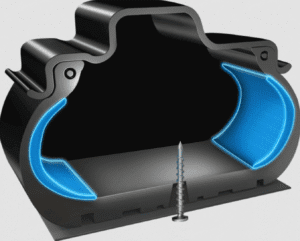
Image: Pirelli
Airless tyres
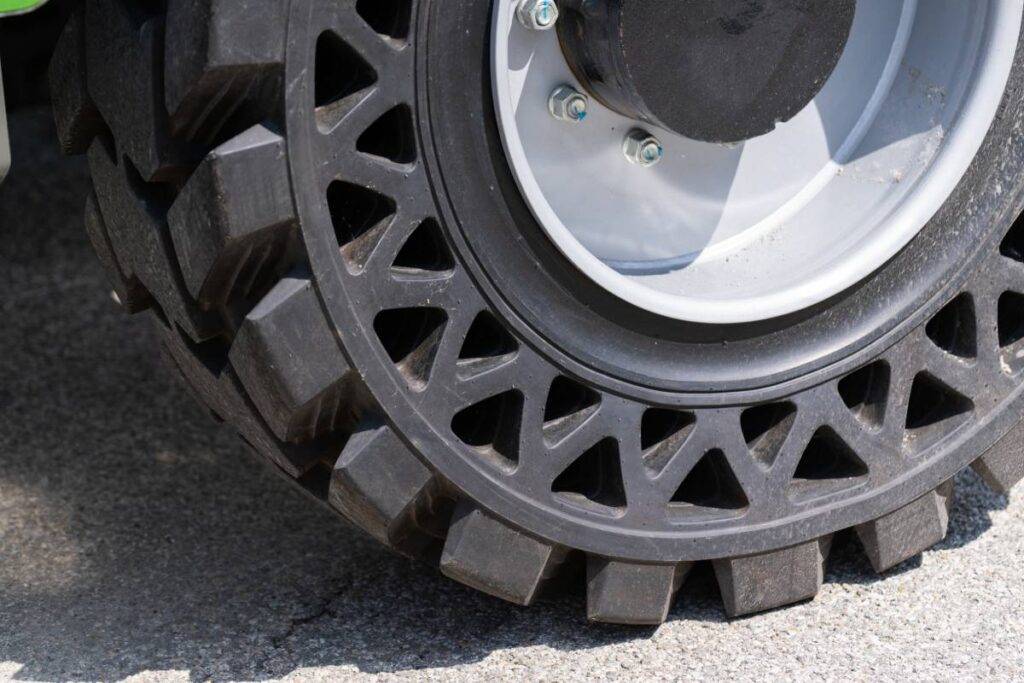
Airless tyres are exactly what they sound like – tyres that don’t rely on air pressure to work! They are made with a honeycomb-like structure and solid materials, which means punctures won’t immediately impact functionality.
These innovative tyres are not yet available for passenger cars but will potentially be a low-maintenance solution for drivers who prefer not to check tyre pressure regularly. With their longer lifespan and eco-friendly materials, they’ll also a sustainable choice. However, there are some downsides to this new tyre technology. Airless tyres will probably initially cost more than traditional tyres and may not provide the smooth driving experience that others do.
While punctures won’t deflate airless tyres, they can still damage the rubber, so you should still regularly check their condition.
Self-seal tyres
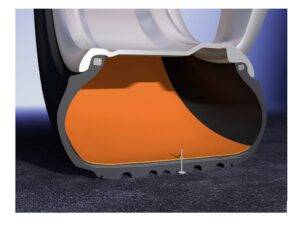
Self-seal tyres are tyres that are made with a sticky sealant layer inside the tyre tread. With this viscous substance lining the rubber, these tyres can ‘self-heal,’ in the event of a puncture. The air pressure inside the tyre forces the sealant into the hole, where it clogs it and hardens around it.
This can also help you stay safe on the road, as your tyre won’t deflate and cause handling issues, and you also won’t have to complete roadside tyre repairs.
Just like with run-flats, you should still head to a tyre specialist to have a professional assess the damage. Fortunately, self-seal tyres can sometimes be repaired with a puncture patch, depending on the extent of the damage.
Puncture-proof but not maintenance-free
Whether you have puncture-resistant tyres or traditional tyres, you should still regularly check them to make sure they are in optimal condition. Here are some top tips to help you maintain your puncture-proof tyres:
- Check your tread with the 20p test at least once a month. Your tyre tread depth should be a minimum of 1.6mm across the central three-quarters.
- Get your TPMS system serviced regularly to ensure that it is working correctly.
- Ensure your tyres are inflated to the correct pressure. Check with the vehicle manufacturer or consult your vehicle handbook to find the recommended level.
- Regularly look for signs of damage like lumps, bumps, cracks and objects embedded in your tyres.
Lastly, puncture-proof tyres can still be punctured – even if they don’t lose air pressure! If you suspect a problem, visit a tyre specialist to assess the damage as soon as possible.
Learn more about tyres and tyre safety
At TyreSafe, we are dedicated to raising awareness of the importance of tyre safety. Stay safe and sound and road-ready with our tyre help and advice.