
Tyres play a fundamental role in road safety, and are the only point of contact between your vehicle and the road, so ensuring they comply with the law is a shared responsibility.
Driving on illegal tyres could not only leave you with hefty financial penalties and points on our licence, but compromise your safety and the safety of other road users.
It’s estimated that over 6 million tyres in the UK have illegal tread each year, which could lead to a fine of up to £2,500 per tyre and 3 penalty points. Moreover, 2 million MOT failures occur each year due to tyre defects, with one million classified as dangerous. Tyres are the primary cause of MOT failures in the first seven years of a vehicle’s life. Last year, 190 people were killed or seriously injured in incidents related to defective tyres every year. Shockingly, this figure is on par with mobile phone-related incidents.
The cost of living crisis has had a further impact on the number of illegal tyres on the road, and in 2023 there were over 6,000 people convicted due to driving on a defective tyre.
So what makes tyres illegal? How do you identify if your tyres are illegal? And what are the consequences of driving on illegal tyres?

What Makes Tyres Illegal?
Tyres become illegal when they fail to meet specific legal requirements. Common reasons for illegal tyres include insufficient tread depth (below the legal minimum of 1.6mm), visible damage such as bulges or cuts, and incorrect inflation levels.
In the UK, cars must have a minimum tread of 1.6 mm, but we strongly advise that you replace your tyres when the tread depth reaches 2mm or less, as performance and grip could be significantly compromised.
The appropriate legislation can be found here The Road Vehicles (Construction and Use) Regulations 1986
What Should You Do If You Suspect Your Tyres Are Illegal?
If you suspect your tyres may be illegal, it is crucial to address the issue promptly. Regularly inspect your tyres for signs of wear, damage, or incorrect inflation. We recommend that you check your tyres once a month, every month. If you suspect your tyres are illegal then seek advice from a qualified tyre specialist. Most garages offer free tyre checks, and you can locate a TyreSafe supporter here.
If any of your tyres are illegal, you’ll need to replace them promptly before any further driving, to avoid potential penalty points, fines and tyre related incidents. Tyres should also be replaced in pairs, so if one of your front tyres is illegal, you’ll need to replace both front tyres, for example.
It’s also worth noting that if you experience a puncture, and make the decision to have your tyre repaired, that the British Standard that applies (BSAU159) in relation to size, number and the location of the repairs on the tyre. Tyre specialists are only able to carry out repairs on the central ¾ of the tyre (known as the minor repair area). If the puncture is situated outside of this area it is too close to the sidewall and therefore not guaranteed to provide a safe and lasting solution.
How Do You Check If Your Tyres Are Illegal?
Checking your tyres for legality involves assessing tread depth, looking for visible damage, and ensuring proper inflation. We use the handy ‘A.C.T’ acronym, to help drivers perform simple checks on their tyres:
Air pressure
The air pressure of each tyre should also be checked using an accurate gauge. Typically, car manufacturers recommend two different tyre pressures, one for light loads and another for when the vehicle is fully loaded. It’s essential that drivers adjust the pressures to accommodate the load they are carrying. These settings can be found in the vehicle handbook, on reputable internet tyre pressure charts such as the one at tyresafe.org, and often in the vehicle’s fuel filler cap or door sill.
Condition
with a visual check, looking at the overall condition of each tyre to see if anything might have penetrated the tread, such as nails or other objects. If any of these objects, cracks or bulges are present, the driver should seek professional advice immediately.
Tread
drivers should check the tread of their tyres to ensure they are above the UK legal tread depth minimum of 1.6mm. Ideally an accurate tread depth gauge should be used but if this is not available, a 20p coin can be used as a guide. Insert the 20p into the main sections of the tyre and at various points around the circumference – should you see the outer rim at any point, you need to have the tread depth checked as it may be illegal.
What Happens If Your Tyres Are Illegal?
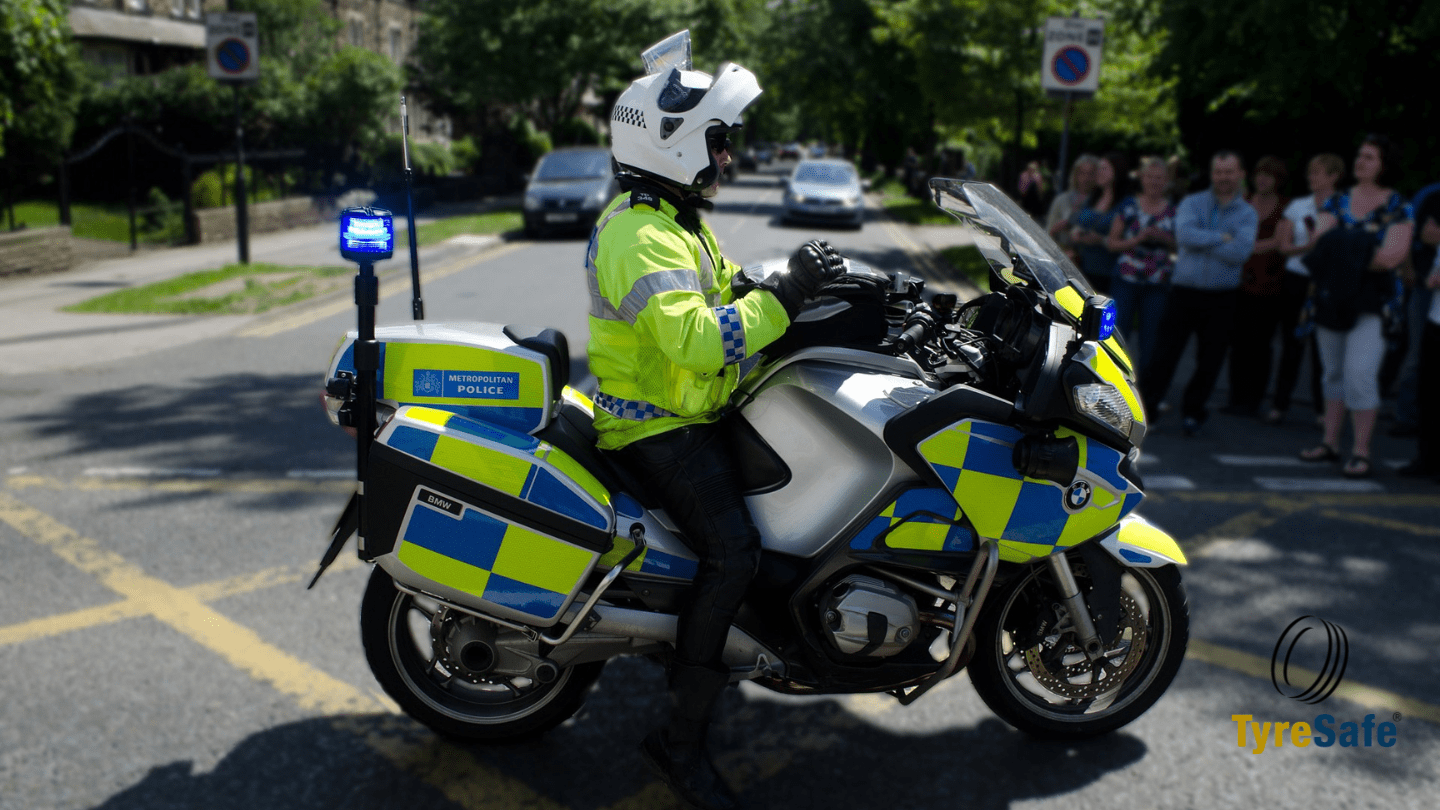
Driving with illegal tyres poses significant risks to your safety and that of others on the road.
If stopped by law enforcement, you may receive a Fixed Penalty Notice (FPN) with points on your licence, or in severe cases, face prosecution.
Moreover, insurance claims may be invalidated if an accident occurs with illegal tyres.
What Penalties Could You Face with Illegal Tyres?
The penalties for driving with illegal tyres can include fines, points on your driving licence, and, in extreme cases, imprisonment.
The severity of the penalty depends on factors such as the extent of the offence and potential risks posed by the illegal tyres.
Fines can reach up to £2500 per tyre, and 3 penalty points per tyre.
Which means that if all four tyres are illegal, you could exceed the maximum penalty points allowed, and be at risk of losing your driving licence entirely.
Regularly checking and maintaining your tyres is a responsibility that every vehicle owner should undertake. We have a wealth of handy resources to help you ensure you are compliant, including our pressure guides and the 20p test.
If in doubt, consult a tyre professional, who will be happy to help you stay within the confines of the law, and ensure the safety of you, your passengers and other road users.