
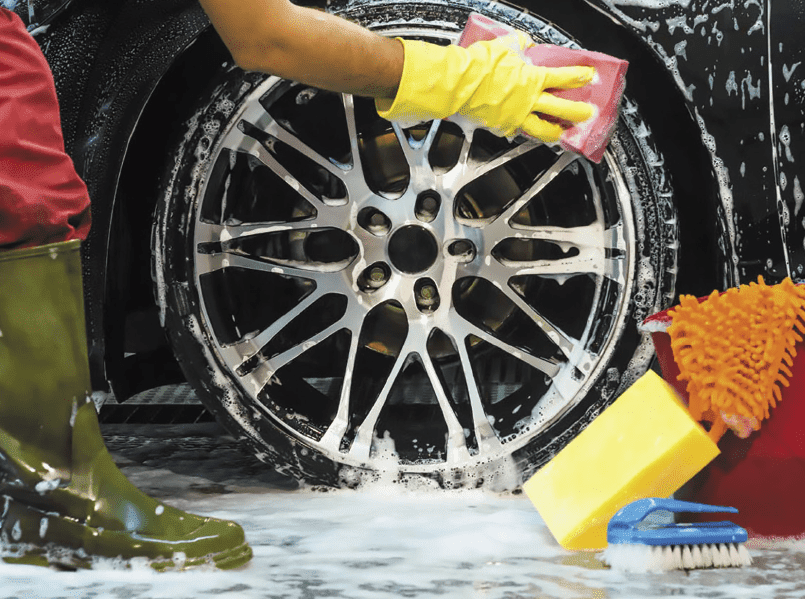
Tyre Checks at Charity Car Washes and Community Events: Guidance Summary
Welcome to the summary guidance hub for conducting tyre safety checks at charity car washes and community events.
Here you can access comprehensive guidance, detailed instructions, and print-ready artwork to help you run your event.
Tyre Checks at Charity Car Washes
Download the official guidance document here and visit our Resources folder under Event Materials for ready-made, print-ready banners and tyre check forms.
Background
Fire and Rescue Services play a vital post-crash and educational role within the Safe System approach to road safety.
-
National Recognition in the Road Safety Strategy: The Government’s UK Road Safety Strategy launched on 7th January 2026 explicitly referenced the TyreSafe Programme. TyreSafe is actively seeking greater prominence for vehicle defects and the inclusion of Safety Performance Indicators (such as DVSA MOT data) as vehicle health indicators.
-
Injury and Fatality Statistics: On average over the last five years, 163 people are killed or seriously injured in incidents related to ‘defective tyres’. The latest 2025 figure of 201 tyre-related KSIs is especially alarming, as it is up 19% year-on-year and 38 higher than the 5-year average.
-
Stopping Distances: At 70 mph, a worn tyre adds 28% to the Highway Code baseline stopping distance (123 metres total), which is further than the length of a football pitch (Source: Halfords plc and Professor Peter Wells of the Centre for Automotive Industry Research at Cardiff University, October 2023).
-
Inflation and Maintenance: Over half of Britain’s tyres are underinflated (35% driven at least 8psi below recommendation), and 18% of drivers have never checked their tyre pressures (rising to 25% for 18–25 year olds). Underinflated tyres cost an extra £1 billion per year in fuel, increasing consumption by up to 10%.
-
MOT Failures: Over 2 million MOT failures occur annually due to tyre defects (1 million classified as dangerous), making tyres the primary cause of failure in a vehicle’s first seven years.
Aims and Objectives
Aims
-
Encourage regular tyre condition checks and educate on their importance.
-
Demonstrate necessary checks and guide motorists to local professionals if concerned (without disrupting car wash flow).
Objectives
-
Help drivers identify potentially unsafe tyres using simple checks or low-cost tools.
-
Offer relevant, non-binding safety advice based on results.
Competencies, Roles, and Disclaimers
-
No Special Expertise Required: Tyre checks do not require specialist training or involvement from the tyre sector. They can be conducted easily by anyone using a low-cost tread depth or pressure gauge, looking at tread wear indicators, or simply using a 20p coin.
-
Personnel: Suitable colleagues include Firefighters, Community Safety Advisors, Volunteers, and Local Authority Road Safety Officers. Supervised Fire Cadets may help wash cars but must not perform tyre checks.
-
Competency & Delivery: Daily vehicle check familiarity is completely sufficient; staff provide basic, non-binding advisory information only.
Recommended Disclaimer: All visual vehicle checks are performed in a non-professional, purely advisory capacity, are limited to basic tyre safety, and do not constitute a full professional vehicle inspection or service. Drivers should consult a qualified technician if in any doubt.
Expanding Checks with POWDER
To broaden the scope of community vehicle safety education, FRS personnel can also introduce drivers to the easy-to-remember POWDER check acronym for wider roadworthiness:
-
P – Petrol (Fuel): Ensure there is enough fuel for the planned journey.
-
O – Oil: Check engine oil levels and essential fluid levels when the vehicle is parked on level ground.
-
W – Water: Check radiator coolant and windscreen washer fluid levels.
-
D – Damage: Inspect bodywork, windows, mirrors, and general structure for any visible damage.
-
E – Electrics: Check that all lights, indicators, hazard lights, and horns are fully operational.
-
R – Rubber: Check tyre pressures, tread depth, and look closely for cuts, bulges, or perishing.
The ACT Quick Guide (Air Pressure, Condition, Tread Depth)
-
Air Pressure: Check vehicle manufacturer recommendations (found inside fuel flaps or door sills) using a calibrated pressure gauge. Replace dust caps after checking.
-
Condition: Inspect sidewalls for bulges, cuts, tears, embedded foreign objects, and UV perishing/cracking (common in low-mileage vehicles). Damaged tyres should be replaced immediately.
-
Tread Depth:
-
Legal minimum is 1.6mm across the central three-quarters of the tyre.
-
The 20p Test: Insert a 20p coin into the main grooves; if the outer band is visible, the tyre is illegal.
-
Replacement is recommended when tread drops below 3mm due to reduced wet-weather performance and braking efficiency.
-
Penalty: Illegal tyres carry a fine of up to £2,500 and 3 penalty points per tyre.
-
Essential Car Wash Guidelines
-
Seek Permission: Always obtain permission from the organiser or station commander beforehand.
-
Maintain Flow: Never cause road queues or obstructions.
-
No Enforcement: Avoid enforcement agencies (e.g., Police, National Highways) and uniforms that resemble them to ensure a purely educational environment.
-
Voluntary Checks: Tyre checks are entirely optional for members of the public.