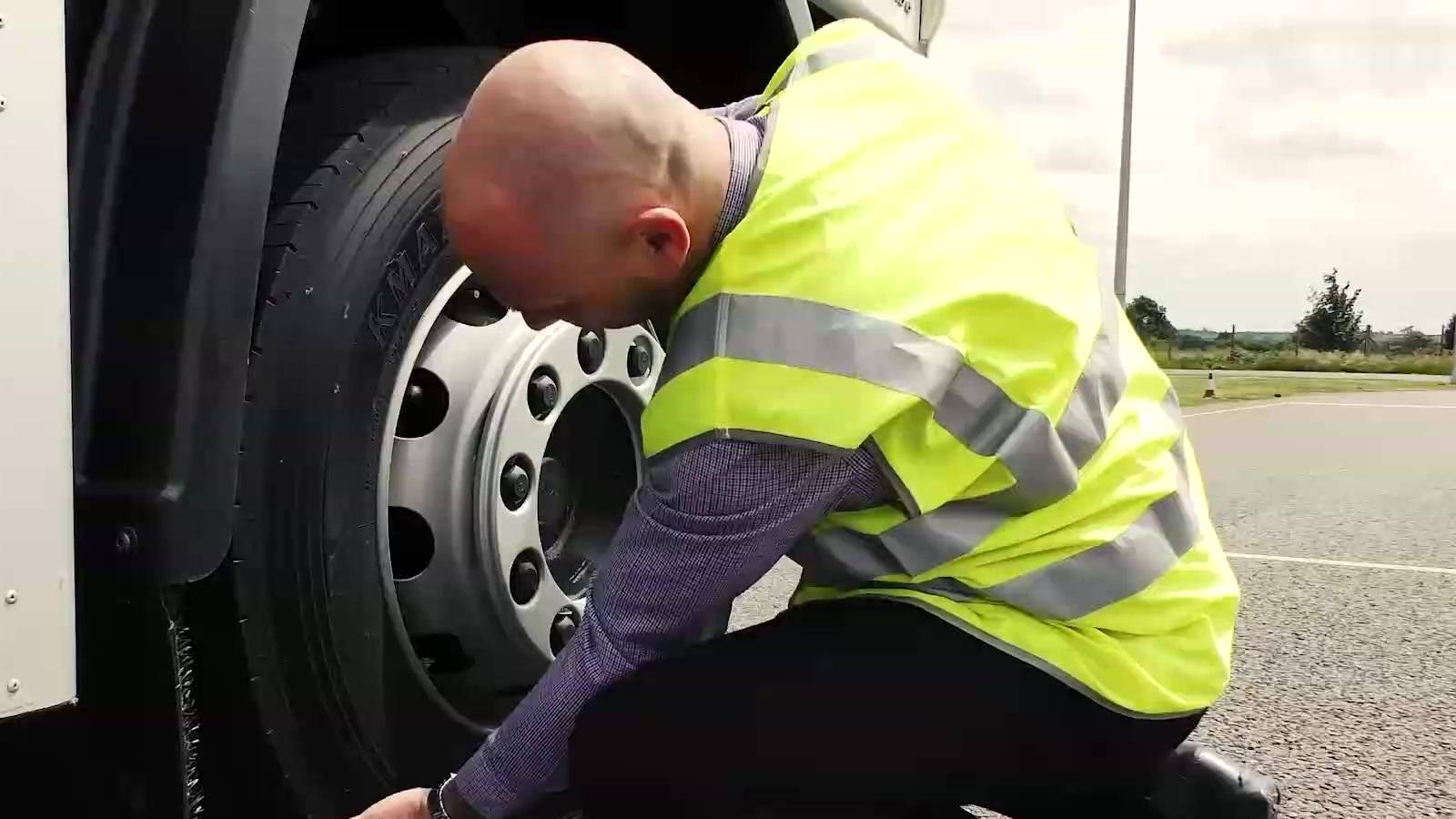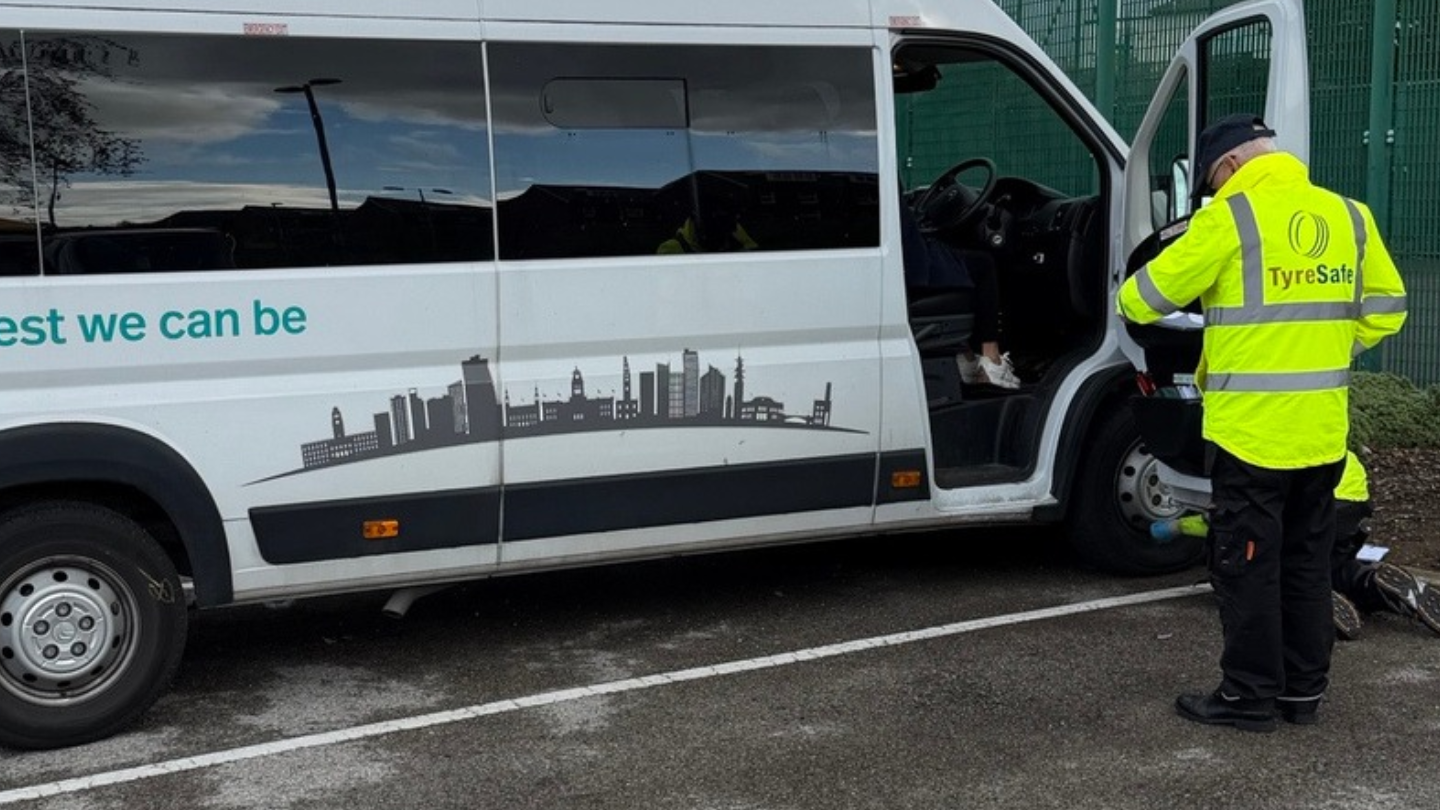
TyreSafe urges bus and coach operators to ACT as Traffic Commissioner cases show missed tyre checks costing operators vehicles, licences and livelihoods.
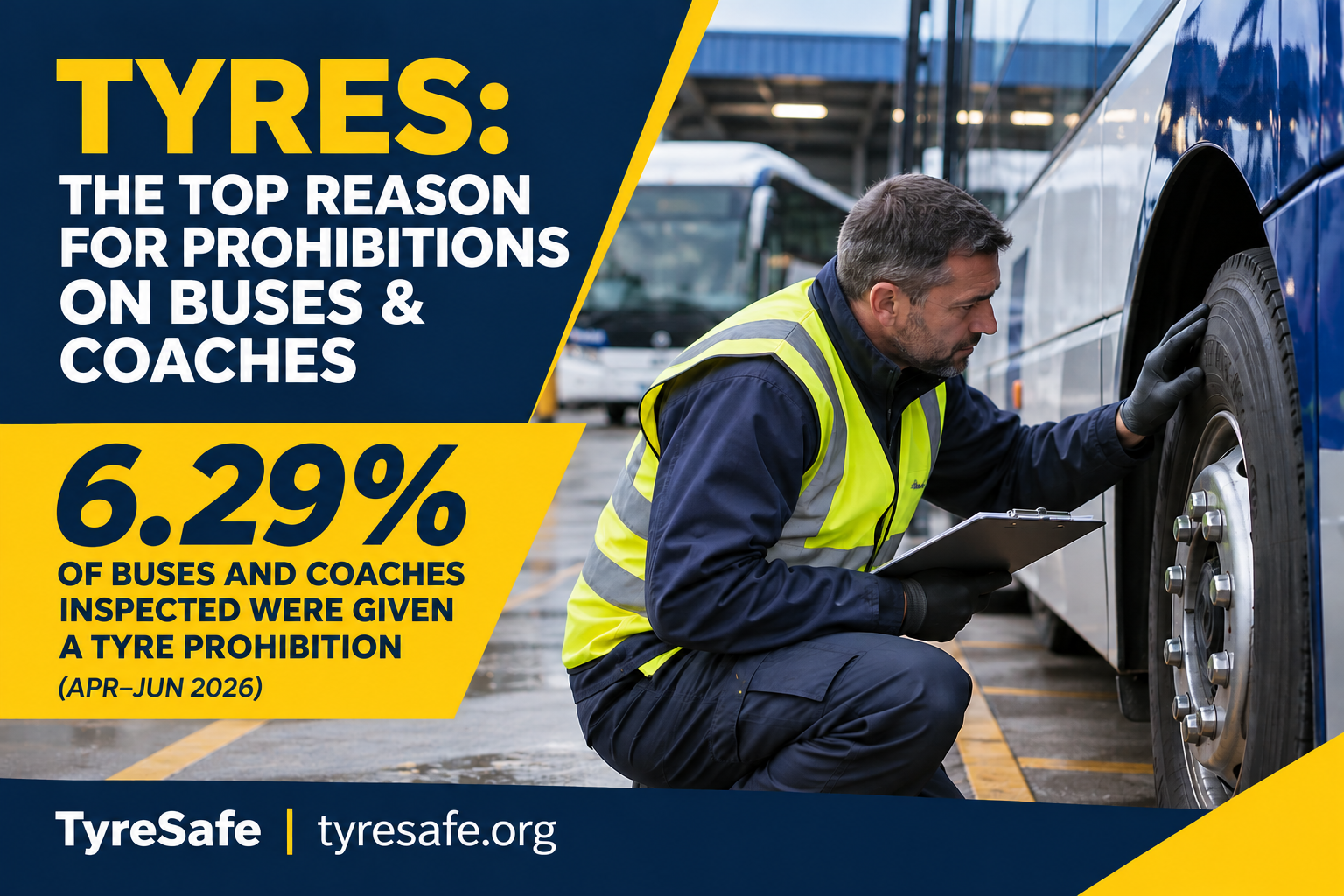
Tyres have been the most common defect category behind prohibitions at DVSA checks on buses and coaches in every quarter since January 2021, 22 quarters in a row.
In the latest figures, for April to June 2026, 6.29% of buses and coaches inspected were given a tyre prohibition. That is more than twice the next most common category, brake systems and components (2.58%). Across all defects, nearly one in five GB-registered buses and coaches checked (19%) received a mechanical prohibition.
Recent Traffic Commissioner decisions show what happens when tyre checks are missed, not recorded or not acted on:
- City Transport Operations, Leeds (formerly A & A Coach Travel): over three years its coaches were given tyre prohibitions for a bulge, tread worn beyond the legal limit and, in December 2025, exposed cords on a front tyre. Wheel nuts were found loose twice, and DVSA found no wheel re-torque procedure. In the year to June 2026, six of its eight roadside checks ended in a mechanical prohibition, against a national average of just under 20%. The licence was revoked in September 2026, and the company and its directors were disqualified for 18 months.
- Lugg Valley Travel, Herefordshire: at a DVSA fleet check, one coach had three of the six wheel nuts loose on a wheel, six weeks after a tyre fitter had tagged it warning that new wheels were needed. Another was found at a school with a tyre bulge judged safety critical. All six vehicles inspected were given prohibitions. The Traffic Commissioner revoked the licence and disqualified the company, its director and its transport manager for four years.
- Watermill Coaches, Scotland: a coach at a secondary school was given an immediate prohibition for a tyre with exposed cords. No walkaround check had been done that morning, and tyre depths, pressures and ages were not being recorded. Four vehicles were taken off the licence for ten weeks.
- Forest Coaches, West Midlands: a coach was given an immediate prohibition for tread worn beyond the legal limit with a break in the fabric. The licence was cut from six vehicles to three for four weeks, and a request to grow the fleet was refused.
None of these defects appeared overnight. Each case shows the same gaps: measurements not recorded, tyre age not tracked, and warnings from drivers or fitters not acted on. The Office of the Traffic Commissioner has estimated that 85% of roadworthiness infringements could be avoided if drivers did a walkaround check before setting off.
Most operators manage tyres well, and large bus groups generally have tyre monitoring in place. The risk is greatest among smaller independent coach and regional bus operators, where time pressure can squeeze walkaround checks and maintenance. Many depend on school and local authority contracts, and a curtailed licence can mean losing that work for good.
TyreSafe is also urging councils that buy school and SEND transport to ask operators for evidence of their tyre checks, defect reporting and tyre replacement policy before awarding contracts.
Schools that run their own minibuses face the same rules. St Martins Preparatory School in Grimsby presented a minibus for its MOT with a tyre cut through to the cord, a defect the Deputy Traffic Commissioner called road safety critical. In September 2026 its licence was cut to one vehicle and suspended for 14 days. Across privately run minibuses with more than 12 passenger seats, tyres caused around half of all dangerous defects found at the MOT (51% in 2025–26).
Buses and coaches are one of the safest ways to travel, with five occupants killed in Great Britain in 2025. But per mile driven, buses have the highest rate of other road users killed of any vehicle type, because they share busy streets with pedestrians and cyclists. The condition of every tyre matters.
TyreSafe is calling on every bus and coach operator to ACT:
- A – Air pressure: check pressures against the vehicle or tyre manufacturer’s settings with calibrated equipment, and record them at every safety inspection.
- C – Condition: look for cuts, bulges, cracks, exposed cords and uneven wear, and act on every defect a driver reports. Check tyre age too: tyres over ten years old are banned on the front steered axles of buses and coaches, and on every single wheel of minibuses with 9 to 16 passenger seats. Record the four-digit date code (‘2419’ means week 24 of 2019) so replacements are planned well ahead.
- T – Tread: measure and record tread depth, and replace tyres well before they reach the legal limit of 1mm. Lancashire County Council, which built its fleet tyre toolkit with TyreSafe, replaces bus and HGV tyres at 3mm.
Also check wheel security and alignment. Tighten wheel nuts to the manufacturer’s torque with a calibrated wrench, re-check after the run-in period, and fit wheel nut indicators so drivers can spot movement. Check alignment after kerb strikes and whenever wear looks one-sided.
Stuart Lovatt, Chair of TyreSafe, said: “Passengers trust that every bus and coach has been checked before it leaves the depot. Tyres have topped DVSA’s list of bus and coach prohibitions for more than five years, and the cases we’re seeing show the same failings again and again: checks not done, measurements not recorded, and warnings ignored.
“Our message to every operator is simple: ACT. Check Air pressure, Condition and Tread, write down what you find, and fix problems before the vehicle goes out. It takes minutes, and it protects your passengers, other road users and your licence.”
Operators can find TyreSafe’s guidance at tyresafe.org/vehicle-owners/fleet-tyre-management-for-hgv-and-pcv, including What your fleet’s tyres reveal to the Traffic Commissioner, and case studies on City Transport Operations and St Martins Preparatory School. DVSA’s guide Tyre defects and damage: HGVs, buses and trailers sets out what inspectors look for.