
The car is packed with all the essentials, from bedding and books to a mini fridge and everything in between, and there’s nothing left to do but hit the motorway and start the next chapter of your life at university.
Despite passing your theory test, driving test, and A levels, it’s completely normal to feel those pre-drive jitters. Driving on the motorway for the first time can feel nerve-wracking, even when you know the rules.
This guide breaks down motorway driving rules you already know and adds simple motorway driving tips, so you can cruise into uni life with confidence.
Motorway driving tips for first-time drivers
Motorway driving can feel fast and overwhelming at first, but a few simple habits can make it much easier to stay calm and in control.
Make sure your car is ready before you join the motorway
Before setting off, take a moment to check your car is safe, legal, and road-ready. If anything makes you question whether it’s safe, get it checked before you travel, and make sure regular maintenance is up to date so you’re not dealing with avoidable issues at motorway speeds.
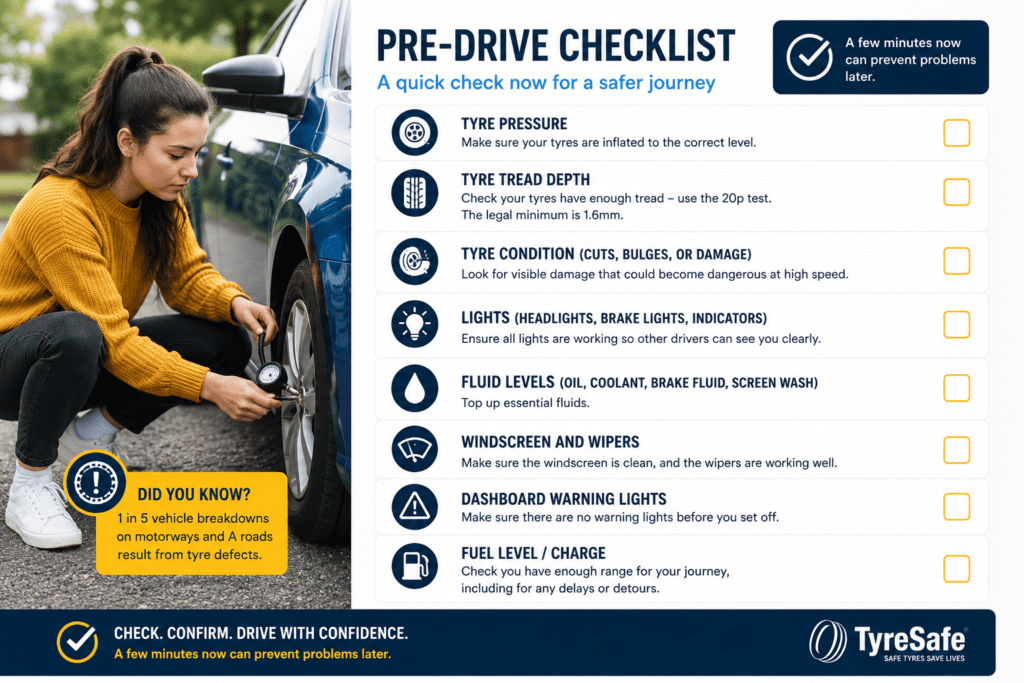
Key things to check before a motorway journey:
- Tyre pressure – Make sure your tyres are inflated to the correct level.
- Tyre condition (cuts, bulges, or damage) – Look for visible damage that could become dangerous at high speed.
- Tyre tread depth – Check your tyres have enough tread using the 20p test – the legal minimum is 1.6mm.
- Lights (headlights, brake lights, indicators) – Ensure all lights are working so other drivers can see you clearly.
- Fluid levels (oil, coolant, brake fluid, screen wash) – Top up essential fluids.
- Windscreen and wipers – Make sure the windscreen is clean, and the wipers are working well.
- Dashboard warning lights – Make sure there are no warning lights before you set off.
- Fuel level / charge – Check you have enough range for your journey, including for any delays or detours.
Did you know: 1 in 5 vehicle breakdowns on motorways and A roads result from tyre defects.
Plan your route and exits before you start driving
Look up your route before you set off so you have a clear idea of the roads, key junctions, services, and exits along the way. You can use Google Maps Street View to familiarise yourself with the journey and what each step looks like.
You can use your sat nav to guide you during the drive, but it’s still helpful to have a rough idea of the route beforehand so nothing feels completely unfamiliar.
You can also plan a practice run, either going out with someone else driving so you can get a feel for the roads or sitting alongside a friend or family member if you’re nervous about doing it alone.
Stay in the left lane unless you’re overtaking
There’s no need to rush on the motorway. In normal driving, you should stay in the left lane and only move out when you’re overtaking another vehicle. The middle and right lanes are for overtaking only and should only be used briefly before returning to the left lane.
Check mirrors regularly and look over your shoulder when needed
This is no different to driving on other roads – staying aware is key. Keep checking your mirrors regularly so you know what’s happening around you, as cars and motorbikes can approach quickly on the motorway.
Always check your mirrors before changing lanes and look over your shoulder to check your blind spot when it’s safe to do so.
Read motorway signs early so you can react calmly
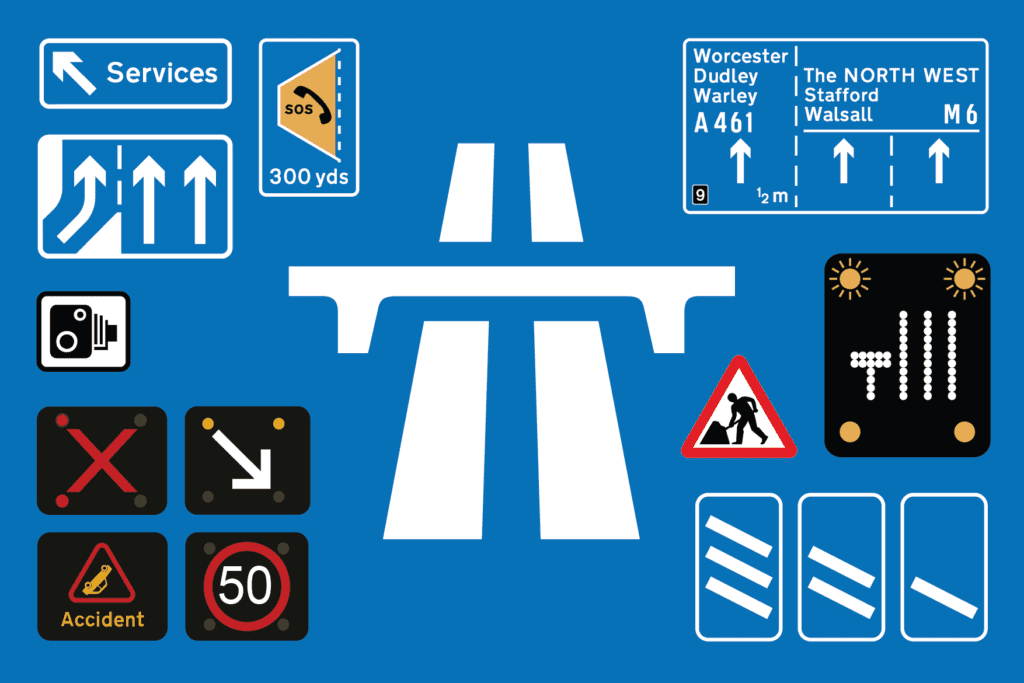
Brush up on motorway road signs so you understand what they mean and can respond confidently. The earlier you spot and process signs, the more time you have to react calmly instead of making last-second decisions.
Some motorway signs you’ll commonly see are:
- Traffic management signs – Speed limits, lane closures, roadworks, and general hazards ahead
- Lane control signals – Overhead signs showing whether lanes are open, closed, or being directed
- Junction and direction signs – Exits and route guidance
- Countdown markers – Signs showing how close you are to your exit in yards
- Service area signs – White signs indicating upcoming places to stop for fuel, food, or breaks
Keep a safe two-second gap from the car in front
Use the two-second rule to judge a safe following distance from the vehicle ahead. Pick a fixed object on the road, such as a sign, chevron or bridge, and count “one one thousand, two one thousand” after the car in front passes it. If you reach the object before you finish counting, you’re too close and should ease off.
Take regular breaks on long motorway journeys
If you’ve got a longer drive to university, plan regular breaks to rest, refuel, and reset your concentration. Motorway driving can feel straightforward, but it still requires focus for long periods, and tiredness can affect your reaction times.
Avoid distractions and stay focused at all times
Stay alert while driving and don’t let your phone, music, or passengers take your attention away from the road. Set your music and sat nav before you set off and put your phone on silent or do not disturb mode so you’re not tempted by notifications while driving. Importantly, don’t interact with your phone at any point, even in slow traffic or at traffic lights, when it can be easy to assume it’s safe to quickly check it.
Know what to do if you break down on the motorway
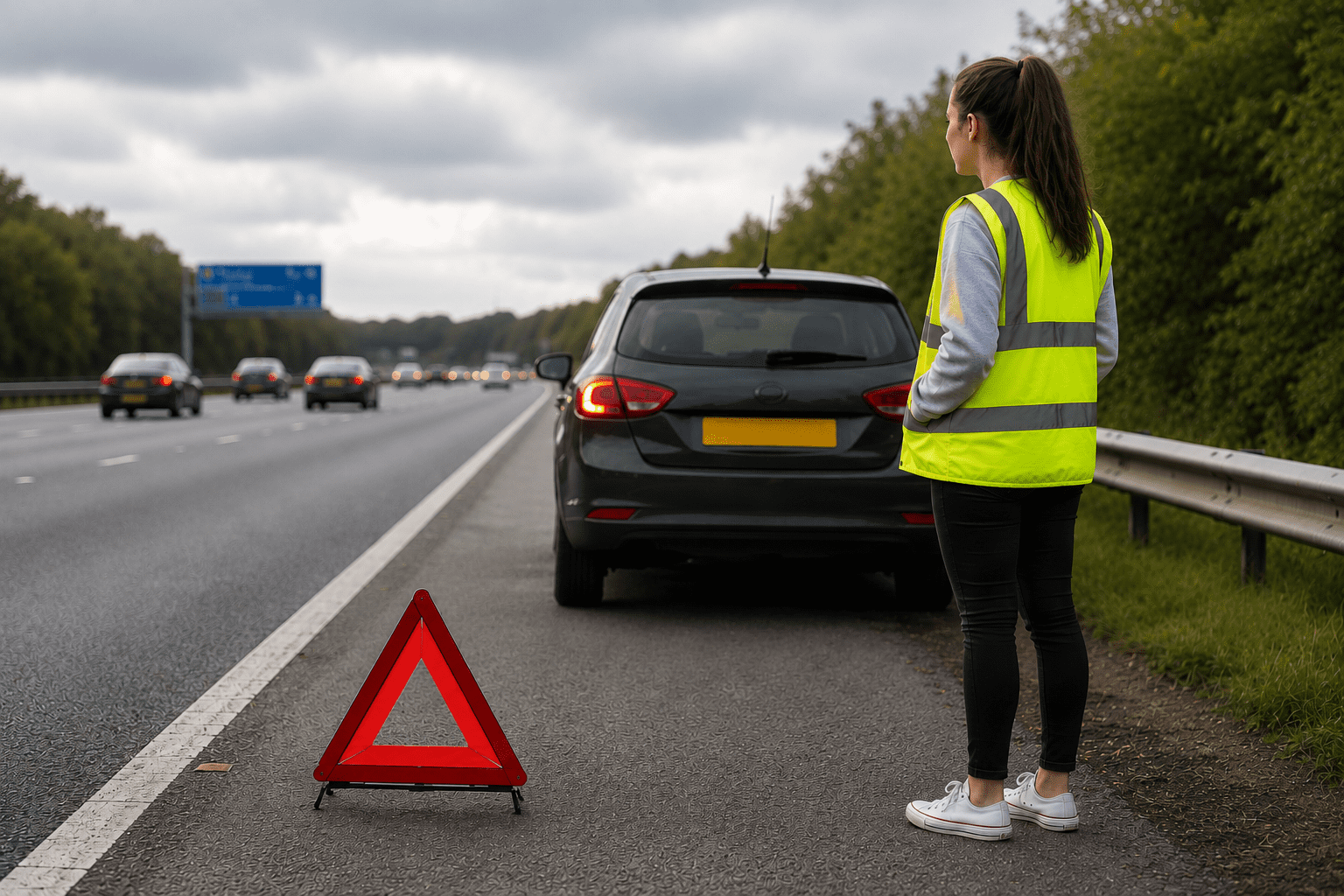
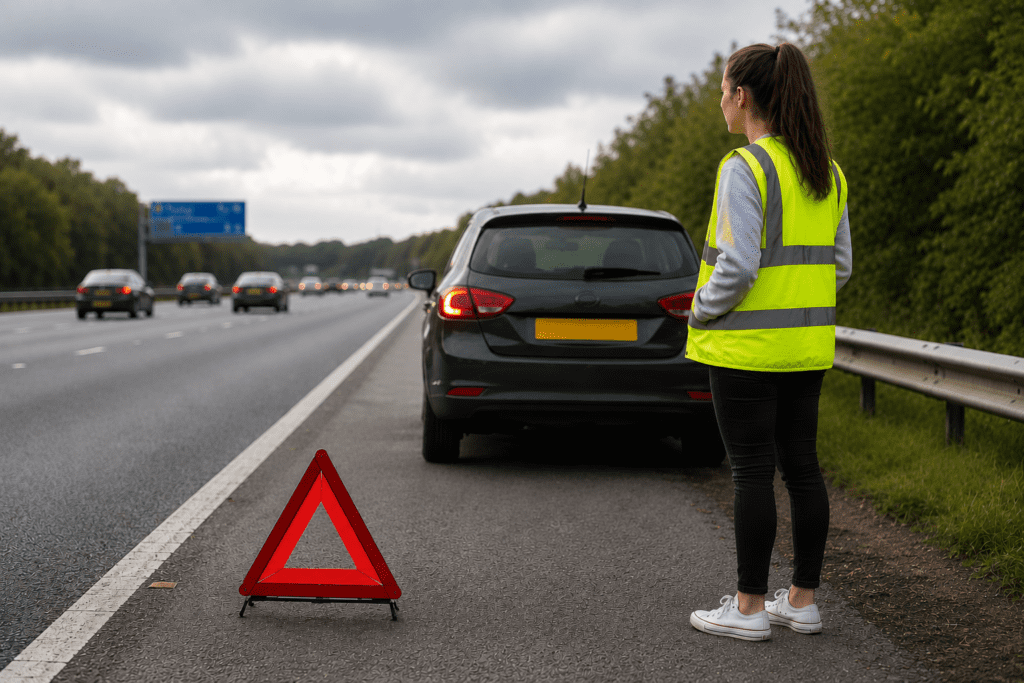
If you break down on the motorway, the key is to stay calm! Move to the hard shoulder if it’s safe, switch on your hazard lights, and exit the vehicle carefully using the passenger side.
If you break down on the motorway because of a puncture or tyre issue, it can be tempting to change your tyre or use a puncture repair kit to fix the problem yourself. But the motorway isn’t a safe place to do that. Traffic is moving fast, and there’s very little space to work safely outside your car. The safest option is to stay in a secure position – away from traffic – and wait for breakdown assistance.
Keep essentials in your car in case of an emergency, such as a warning triangle, high-visibility vest, and a charged phone so you can call for help if needed.
Motorway driving rules explained
If you’re a new driver heading off to uni or using the motorway for the first time, these are the key rules to be aware of:
- Keep left unless overtaking.
- Overtake on the right, then return to the left lane when safe.
- Do not exceed the speed limit (including variable limits on gantries).
- Never use the hard shoulder unless in an emergency.
- Use indicators clearly and in good time before changing lanes or exiting.
- Maintain a safe following distance (at least a two-second gap).
- Do not reverse or turn around on the motorway.
- Do not stop on the carriageway or hard shoulder unless it is an emergency.
- Use seatbelts at all times for all passengers.
- Use the slip road to match motorway speed before joining traffic.
- Give way to traffic already on the motorway when joining.
How to build confidence on the motorway
Build your motorway driving confidence with simple advice you can put into practice straight away:
Start with short motorway sections – Build up gradually with shorter stretches so it doesn’t feel overwhelming at first.
Drive at quieter times of the day – Practise driving early in the morning or at off-peak times to reduce the pressure.
Try different driving conditions when you feel ready – Drive in rain and at night to help you feel more prepared for a variety of real-world situations.
Bring a passenger – Take a friend or family member along for support while you get more comfortable on the motorway.
And lastly – practise, practise, practise! It may seem unhelpful at first, but the best way to build confidence, outside of knowing the rules, is to drive on the motorway – often and repeatedly. It’s okay if it takes time – confidence builds with experience, so give yourself space and let it come gradually.
Stay confident on the road with TyreSafe
Learn more about basic car maintenance, feel confident and stay safe on the road with TyreSafe. We’re dedicated to raising awareness of the importance of tyre safety and keeping you prepared for every journey.