
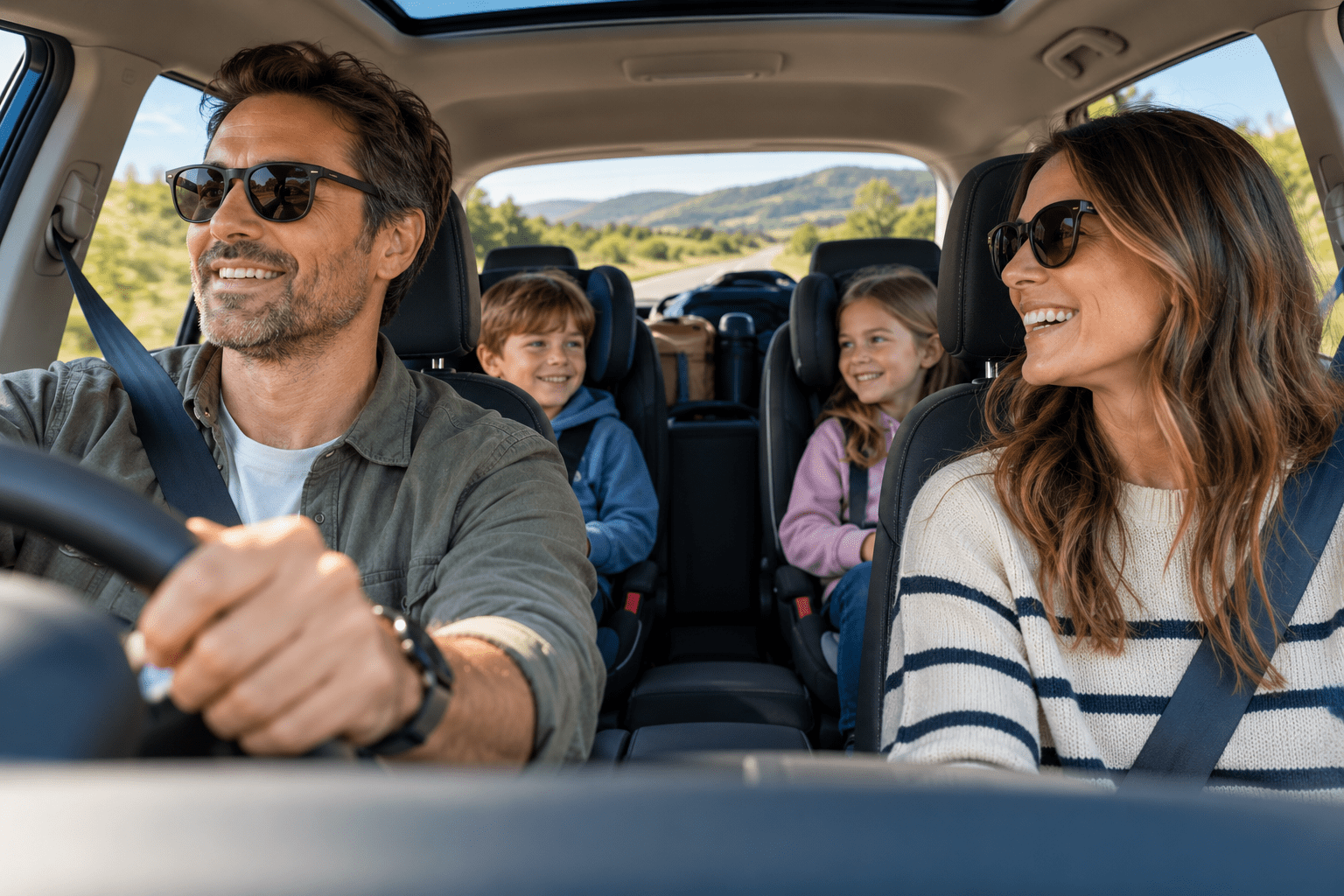
Why protecting children on the road starts before the journey
When it comes to keeping children safe on the road, most parents and carers rightly focus on ensuring child car seats are fitted correctly and used appropriately.
However, while child restraints provide vital protection in the event of a collision, road safety experts are encouraging families to take a broader view of vehicle safety and consider the role that tyres play in helping prevent collisions from happening in the first place.
Why tyre safety also matters when travelling with children
Tyres also play a crucial role in keeping your vehicle safe, particularly when travelling with children. Tyres are the only point of contact between a vehicle and the road, directly affecting braking, grip and steering. If tyres are worn, damaged or incorrectly inflated, stopping distances can increase and a vehicle’s ability to respond in an emergency can be significantly reduced.
The Government’s new, road safety strategy
This message has become even more relevant following the publication of the Government’s new Road Safety Strategy, which places a renewed focus on reducing deaths and serious injuries among young people. The strategy sets out ambitious targets to significantly reduce road casualties by 2035, including among children and young road users.
TyreSafe believes these ambitions can only be achieved through a Safe System approach, where every aspect of road safety works together to protect those most at risk.
Child restraint safety remains a critical part of that approach. Data from community child seat checking programmes delivered by Good Egg Safety CIC consistently finds that around two thirds of child restraints inspected are either incorrectly fitted or unsuitable for the child using them.
Common issues identified include:
- Slack seat belts
- Loose seat bases
- Incorrectly adjusted support legs
- Incorrect belt routing
- Carry handles positioned incorrectly
These findings highlight the importance of regular checks and reinforce a simple principle: child safety starts before the journey begins.
Tyre checks you can carry out to ensure vehicle safety
TyreSafe encourages parents and carers to make regular tyre checks part of their vehicle safety routine, using the ACT message:
A – Air Pressure
Check tyres are inflated to the vehicle manufacturer’s recommended pressure.
C – Condition
Inspect tyres for cuts, bulges, cracks or embedded objects that could compromise safety.
T – Tread
Ensure tyres meet the legal minimum tread depth of 1.6mm and are free from uneven wear.
Parents and carers should also ensure that children use an appropriate child car seat until they are either 12 years old or 135cm tall, whichever comes first.
TyreSafe provides lots of practical guidance to help drivers make these checks part of their regular routine. Simple checks of tyre pressure, condition and tread can help ensure that tyres are in a safe and roadworthy condition, giving drivers confidence that their vehicle is prepared for the journey ahead.
TyreSafe’s practical guides help parents and carers check tyre pressure, damage and tread depth, supporting safer journeys for everyone.
Useful tyre safety guides:
- Check your tyre condition – guidance on identifying damage, irregular wear and other issues that could affect tyre safety.
- Check your tyre pressure – advice on why the correct pressure matters and how to check it.
- Check your tread depth – practical guidance on checking tread depth, including the 20p test.
- Tyre safety checks – an overview of the key checks drivers should make regularly and before longer journeys.
Stuart Lovatt, Chair of TyreSafe, said, “A correctly fitted child seat offers vital protection, but it is only one part of the safety picture.
“Tyres are the only contact between the vehicle and the road and have a direct impact on braking, grip and control. If tyres are not properly maintained, stopping distances increase and vehicle performance can be affected—particularly in emergency situations or poor weather conditions.
“Keeping children safe means looking at the whole journey and the whole vehicle. Simple checks can make a significant difference.”
Janis James MBE, Chief Executive of Good Egg Safety CIC, said:
“Parents and carers go to extraordinary lengths to protect the children they love, yet our national data consistently shows that around two thirds of child car seats are being used incorrectly—often by caring families who simply don’t realise something is wrong.
“The encouraging news is that many of the issues we identify can usually be corrected quickly with the support of our highly experienced and accredited Safety Advisors, potentially making a life-saving difference in the event of a collision.
“By working alongside TyreSafe, we can support a wider Safe System approach that helps families stay safer both inside and outside the vehicle.”
Whether undertaking the school run, a family day out or a longer holiday journey, taking a few minutes to check both child restraints and tyres can help ensure every journey starts as safely as possible.
Because when it comes to protecting children on the road, every part of the journey matters.