How to Check Your Wheel Alignment
Wheel alignment cannot be measured at home, but your tyres show the effects of misalignment long before most drivers notice a change in how the car drives. Adding a quick check for uneven wear to your monthly A.C.T. routine helps you spot a problem early.
Knowing what a proper alignment check involves helps you get the right job done at the garage.
Make Alignment Part of Your A.C.T. Checks
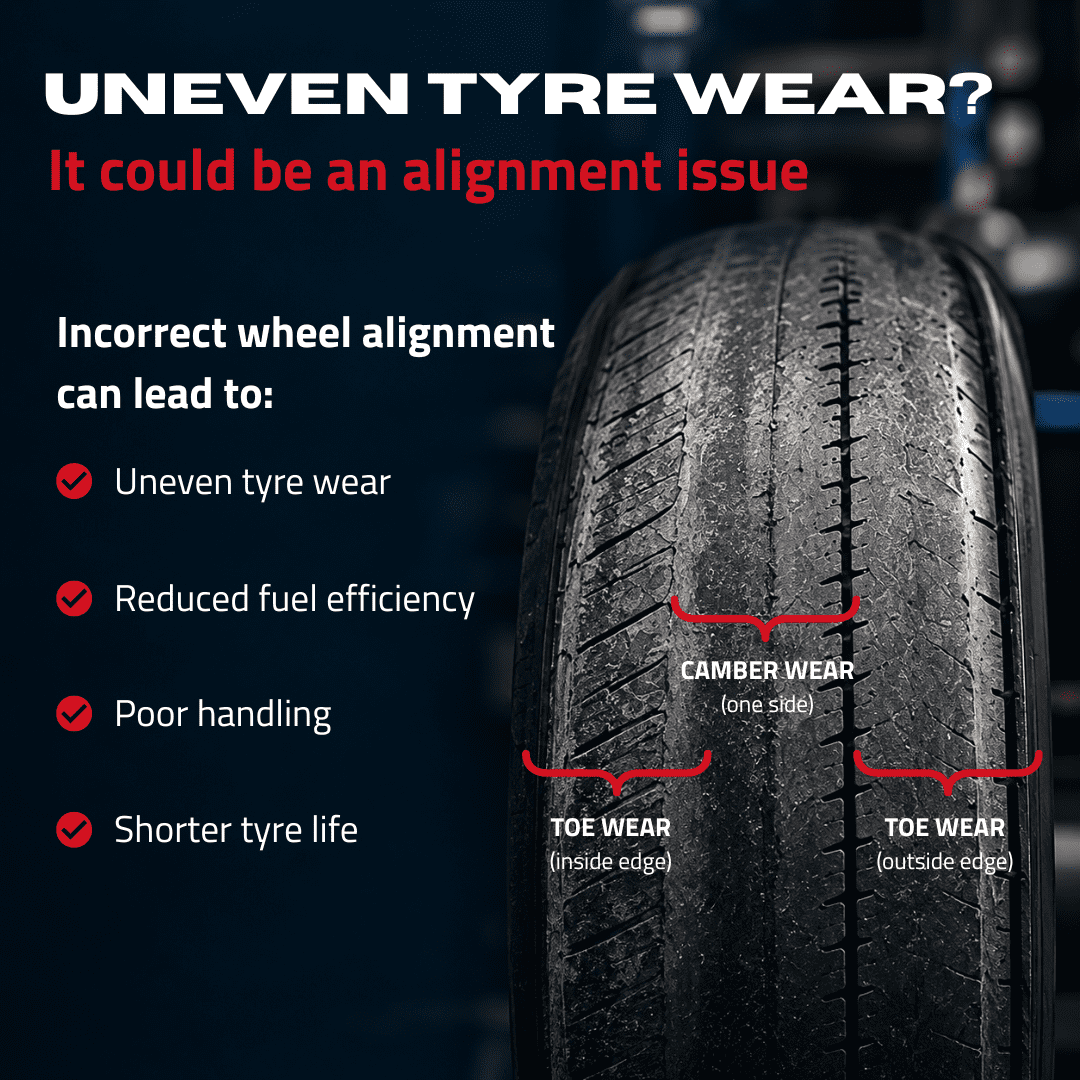
TyreSafe recommends checking your tyres’ Air pressure, Condition and Tread depth and evenness of wear once a month and before long journeys. Alignment fits naturally into the same routine, because a wheel that is not pointing in the right direction leaves it’s mark on the tread, and the treadwear pattern can say a lot about how the tyre pressures and wheel alignment is set. You cannot measure alignment with a gauge or a 20p coin, but you can learn to read what your tyres are telling you.
For an explanation of the alignment angles and how they affect safety, read our guide to the critical role of wheel alignment in tyre safety.

Step 1: Rule Out Tyre Pressure First
Incorrect tyre pressure is one of the most common causes of irregular wear, and it can mask or mimic an alignment problem.
- Wear on both shoulders with a healthy centre points to under-inflation.
- A worn centre band with healthy shoulders points to over-inflation.
Check and set your pressures to the figures in your vehicle handbook before drawing any conclusions about alignment. Do this with the tyres cold, and particularly when there is a noticeable change in the weather temperature.
Step 2: Feel the Tread, Don’t Just Look at It
Some of the clearest signs of misalignment are easier to feel than to see. With the vehicle parked safely, the engine off and the handbrake on:
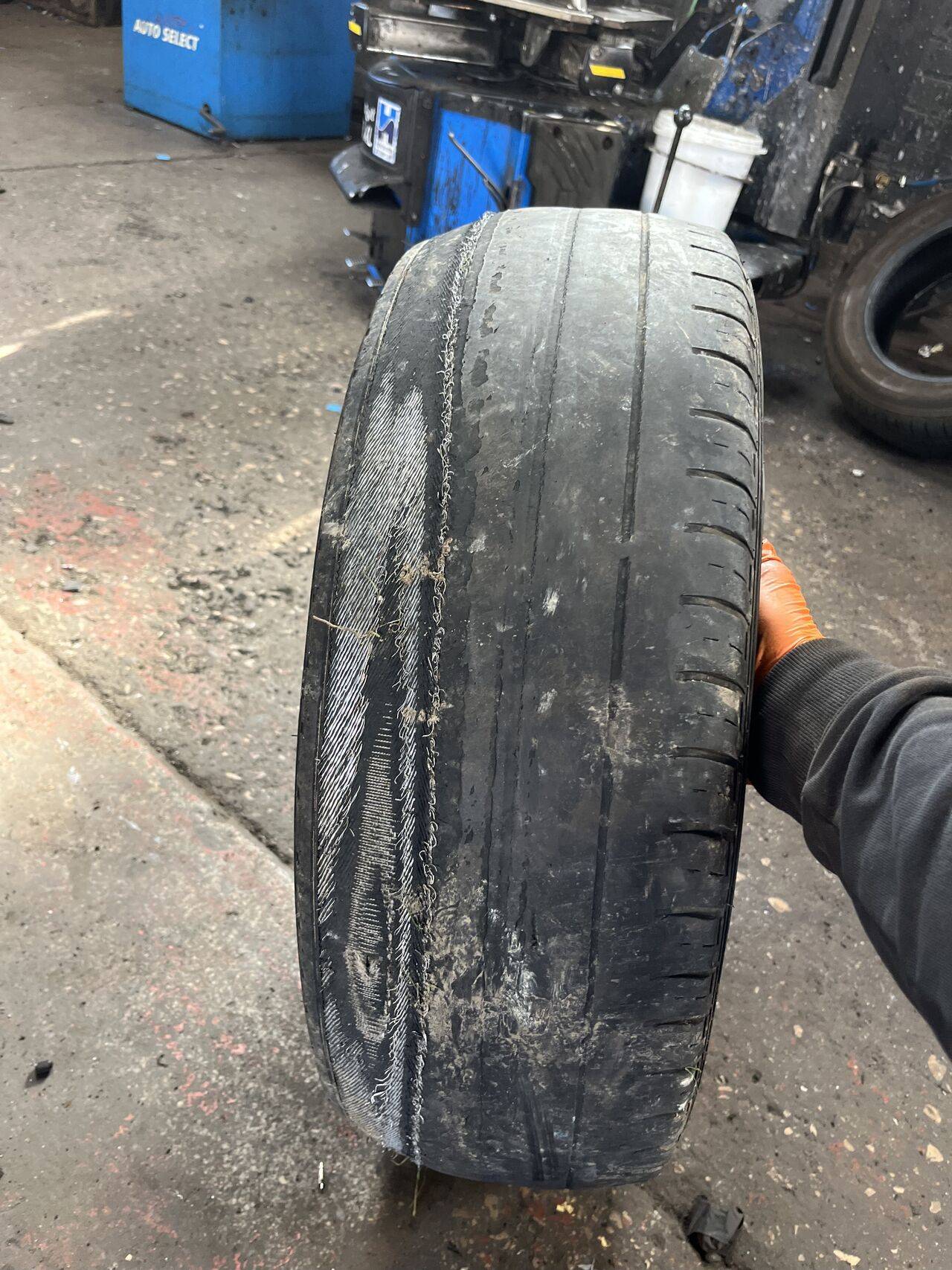
- Run your hand across the tread. Move from the outer edge to the inner edge and back again. If the tread feels smooth in one direction and sharp in the other, this is known as feathering. It is a sign the tyre is scrubbing along the road rather than rolling straight. Take care, as worn tyres can have exposed wires or sharp objects embedded in the tread.
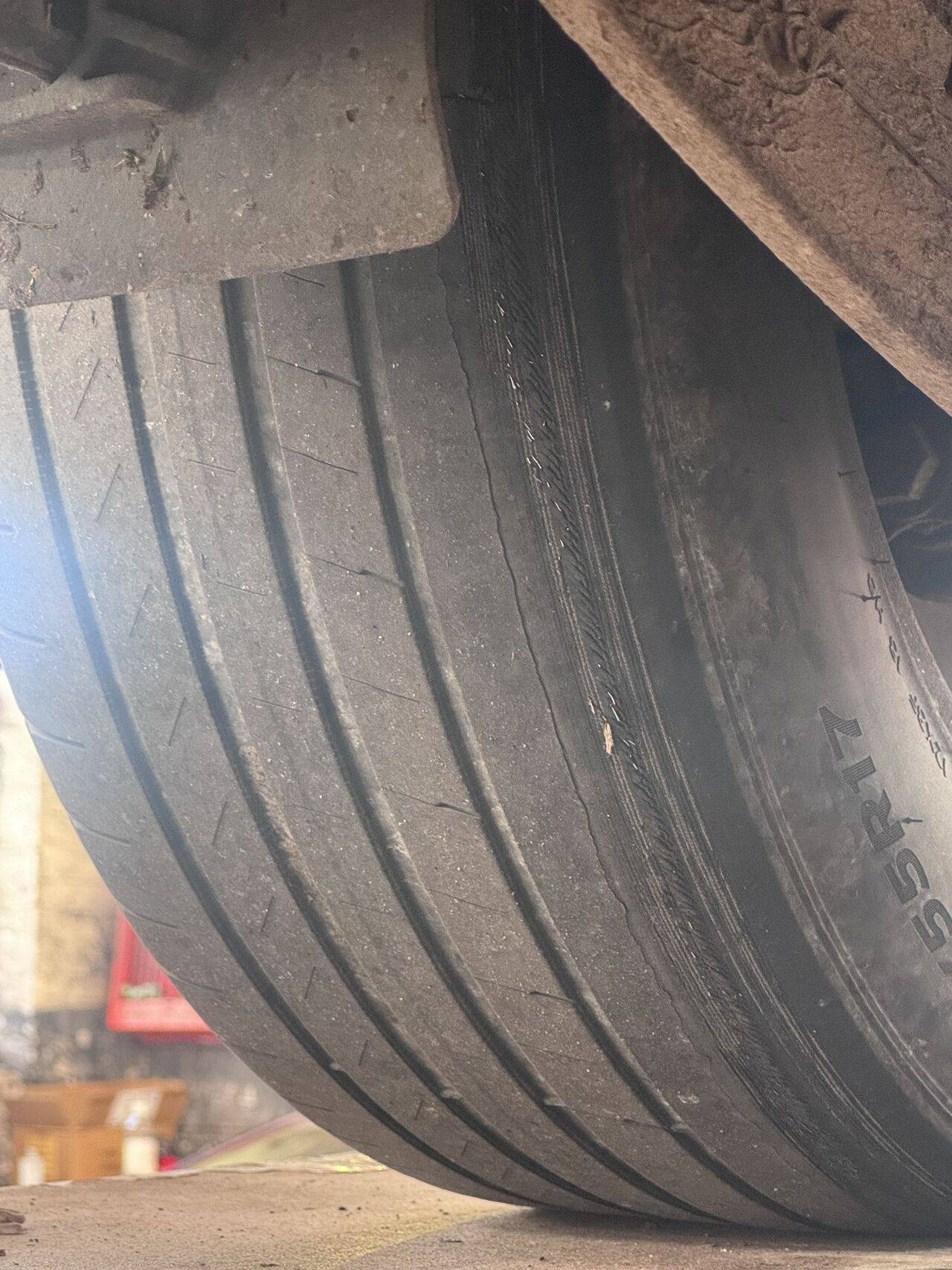
- Turn the steering to full lock. This exposes the inner shoulder of the front tyres, which is hidden when the wheels point straight ahead. Inner edge wear faces the underside of the car and is easily missed until the tyre is removed.
- Compare left and right. Look at both tyres on the same axle. Heavier wear on one edge, or a different pattern on each side, is worth having measured.
Supertracker’s guide to reading tyre wear patterns explains what technicians look for in more detail.

Step 3: Know Which Wear Is Not Alignment
Not every unusual wear pattern is caused by alignment. Cupping is a regular pattern of dips and high spots around the tread. It usually points to worn shock absorbers or other suspension parts, and can also come from severe wheel imbalance. An alignment on its own will not cure it.
When you book your car in for repair, describe what you have found rather than simply asking for “the tracking”. It gives the garage a head start on finding the real cause.
Beware: Tracking and wheel alignment are not the same. Tracking applies to the front axle, Wheel Alignment involves both axles and measures the angle that the tyre tread meets the road (or Camber).
Why Passing the MOT Does Not Mean Your Alignment Is Right
Wheel alignment is not measured as part of the MOT. The test does check your tyres, but the legal minimum tread depth of 1.6mm for cars applies across the central three-quarters of the tread. The tread outside that band can legally be bald.
This matters because misalignment usually wears the edge of a tyre first. A tyre can pass the MOT with a badly worn shoulder. The wear then continues inward until it reaches the central band and the tyre becomes illegal. Supertracker explains this in more depth in Wheel Alignment and the MOT.
As GOV.UK points out, a vehicle can be unsafe even with a current MOT certificate. Your own checks between tests are what catch the problem early.
What a Proper Wheel Alignment Check Involves
The rear wheels decide the direction the car is actually pushed along the road. This is known as the thrust angle. If the rear is out, a front-only adjustment can leave the car travelling slightly sideways, known as crabbing, with the steering wheel held off-centre to drive straight. This is why the rear axle is the starting point for an accurate alignment.
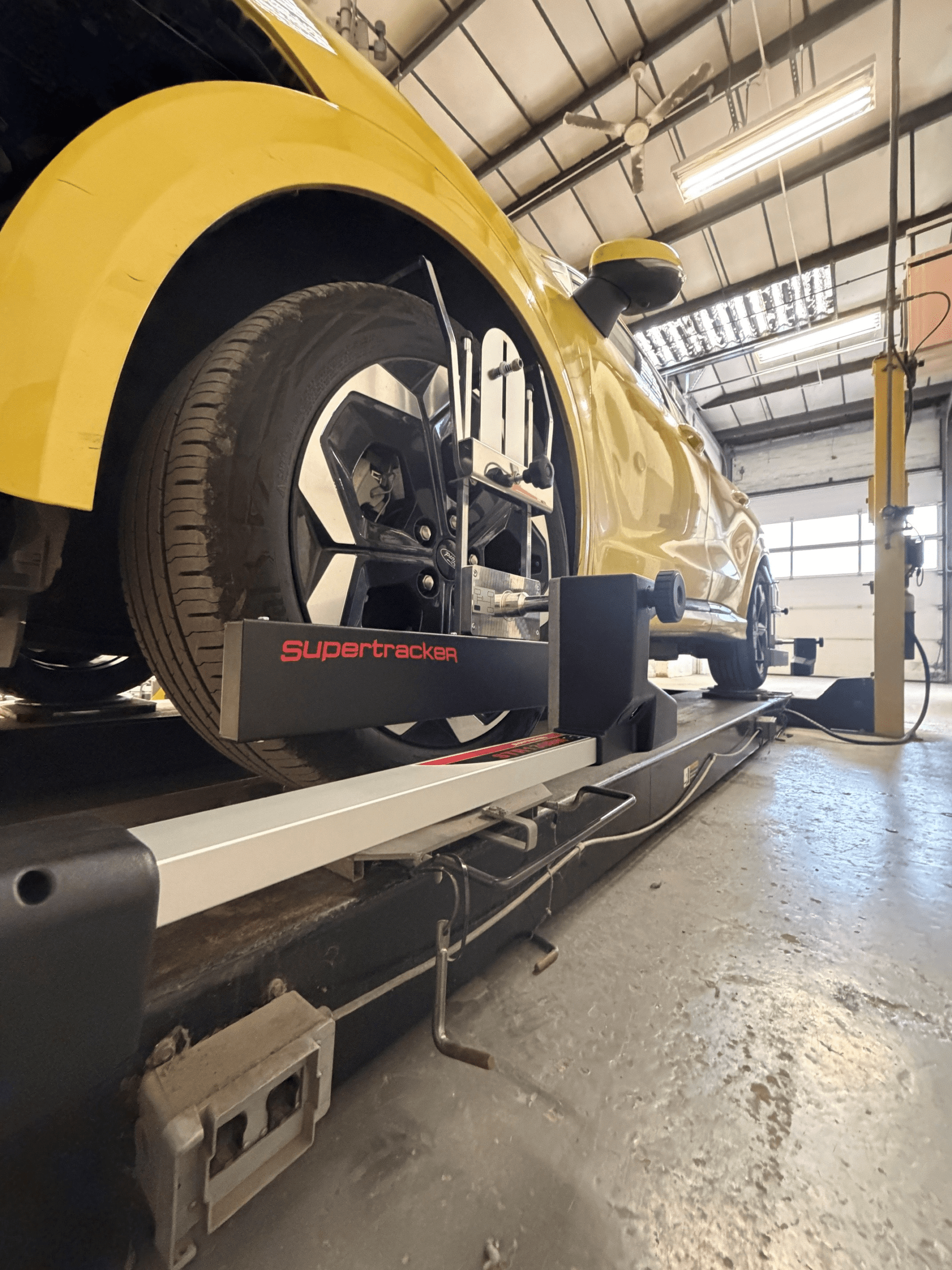
There is a range of wheel alignment machines that can read the geometry of a vehicle from simple laser, to computerised and 3D systems that can provide before and after readings for customers. Alignment adjustments should be carried out by trained technicians, using the alignment machines as intended by the manufacturer.
Professional Wheel Alignment systems compare the live readings of the vehicle to data supplied by the vehicle manufacturer embedded inside the system to ensure all wheels can be set to the correct relative position. It is not simply a case that all vehicles have everything angled in the same perfect forward alignment. The alignment settings of a vehicle allow for movement in the geometry caused by the forces applied to the wheels when the vehicle is travelling forward. As measurement and adjustment can only be conducted on a stationary vehicle, how the vehicle performs when forward motion is compensated for in the settings. In general, a Front Wheel Drive vehicle is set to toe-out, and a rear wheel drive is set to toe-in.
What should happen before the alignment
- Pressures set correctly, so the readings reflect the true geometry.
- Worn steering and suspension parts replaced first. If a worn joint lets the wheel move, the settings will not hold once the car is driven.
- Tyres with usable tread. Badly worn tyres distort the readings. If new tyres are due soon, it makes sense to have them fitted before the alignment.
If you have had steering or suspension parts replaced, such as track rod ends, struts or control arms, an alignment check should follow once all of the work is complete.

Your Tyres Are the Early Warning
Alignment can only be measured properly with the right equipment and an experienced technician, but your monthly tyre checks are the early warning system. Have your alignment checked by a professional with a Wheel Alignment system if you:
- find uneven wear
- notice feathering
- have hit a kerb or pothole hard
TyreSafe Partners with Supertracker
TyreSafe acknowledges the help and support of Supertracker in the compilation of this advice.