

Ever looked at your tyres and wondered, “Is this even safe?”
Well, chances are you’re not alone, and if you’re a new driver, the answer isn’t always obvious. Maybe you’ve spotted a weird crack, an odd-looking bulge, a nail or some suspicious sidewall damage – whatever it is, you’ll want to suss out if it’s just cosmetic or something that’ll need a trip to the garage.
Tyres may not be the most riveting part of your car, but ignoring an issue could leave you stranded, coughing up cash for a repair, or worse. This guide will help you spot common tyre problems, figure out what’s actually safe to drive on, and give you the confidence to deal with tyre emergencies before they become worse.
Punctures and slow leaks
Punctures and slow leaks can sneak up on you. Here’s what to watch for.
What you might notice – Visual cues for punctures and slow leaks
| What to look for | Picture it | Ask yourself |
| Embedded object in the tread | 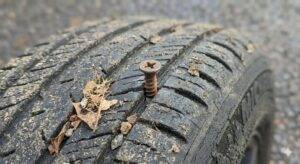 |
Can I see any nails, screws, shard of glass or stones? |
| Slightly flattened sidewall | 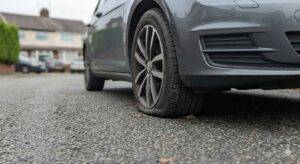 |
Does the tyre look squished where it meets the ground? |
| Small bubble or blister on the tread surface | 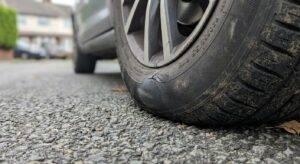 |
Do I spot any bubbles or blisters forming? |
| Small bubble or blister on the tread surface | 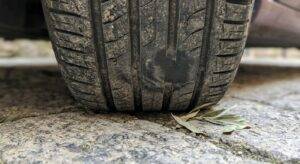 |
Is there a low spot or dip anywhere on the tread? |
| Wet patch or dark mark on the tyre | 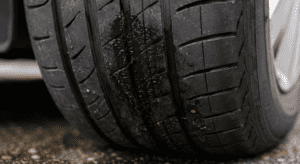 |
Do I see any dark or shiny spots that weren’t there before? |
| Tyre pressure warning light | 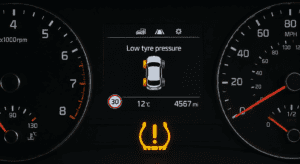 |
Is my dashboard showing the tyre warning light? |
Is it safe to drive with a slow puncture?
No, it is not safe to drive with a slow puncture. A slow puncture can suddenly start to lose air faster, turning into a flat tyre before you know it. Driving on a tyre that is gradually losing air can affect handling and braking and increase the risk of a blowout or accident.
Is it safe to repair a punctured tyre?
Yes, it is safe to repair a punctured tyre, but only if the damage meets certain criteria. Repairs must be done by a tyre specialist and follow the British Standard AU159 rules. That means:
- The damage is within the central three-quarters of the tread.
- The hole is less than 6mm in diameter.
- There is no other structural damage to the tyre.
You can use a temporary repair kit to get you home or to a garage, but it’s not a permanent fix.
Is it safe to drive with a nail in your tyre?
It is safe to drive a short distance, ideally straight to a garage, with a nail in your tyre. You might be tempted to pull it out, but leaving it in can actually help plug the hole and keep your tyre pressure stable for the short journey. Removing it yourself could make the hole bigger and cause more damage. Driving long distances or at high speeds with a nail in the tyre risks blowouts, more damage, and bigger repair bills.
Flat tyres
A flat tyre is hard to miss once it’s happened. Here’s what they look like in the real world.
What you might notice – Visual cues for flat tyres
| What to look for | Picture it | Ask yourself |
| Tyre visibly squashed | 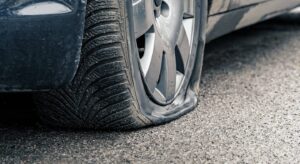 |
Does the tyre look much flatter than usual? |
| Sidewall bulging out at the bottom | 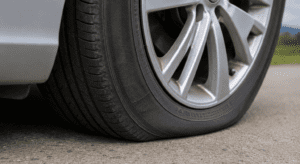 |
Does the sidewall look like it’s spreading where it meets the road? |
| Tyre pressure warning light | 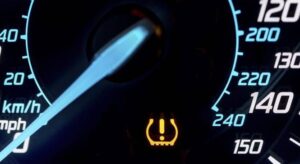 |
Is my tyre warning light on? |
Is it safe to drive with a flat tyre?
No, it is not safe to drive with a flat tyre. Driving on a flat is illegal. Your car won’t handle properly, your brakes won’t stop as quickly, and there’s a real risk of a blowout or accident. Plus, even a short drive can damage your wheel and suspension, especially if the rubber is no longer protecting the rim, and repairs can be expensive.
Is it safe to drive on a spare tyre?
Yes, it is safe to drive on a spare tyre, but only as a temporary fix. Spare tyres, especially space-savers, are not designed for long distances or high speeds.
Cracks, bulges, and bubbles
Cracks, bulges and bubbles cause more than just cosmetic damage. Look out for these signs that your tyre’s structure is failing.
What you might notice – Visual cues for cracks, bulges, and bubbles
| What to look for | Picture it | Ask yourself |
| Small cracks along the sidewall | 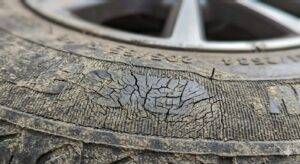 |
Do I see any small lines or splits along the sidewall? |
| Deep cracks in the tread or shoulder | 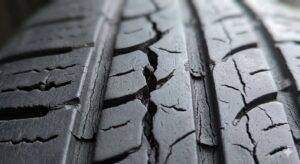 |
Are there deep splits running across the tread or edge of the tyre? |
| Bulge or bubble on the sidewall | 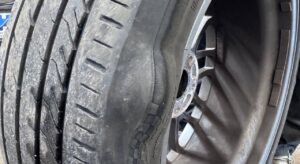 |
Is the tyre surface sticking out or forming a bubble anywhere? |
| Discolouration or rubber drying | 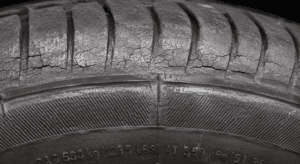 |
Do parts of the tyre look hard, shiny, or brittle compared to the rest? |
Is it safe to drive with cracked tyres?
No, it is not safe to drive with cracked tyres. Cracks happen when the rubber starts to degrade, weakening the tyre’s structure. This increases the risk of blowouts and makes the surface harder, reducing grip, especially in wet conditions.
Is it safe to drive with a bulge in your tyre?
No, it is not safe to drive with a bulge in your tyre. Driving with a bulging tyre is also illegal. A bulge usually means the internal structure of the tyre has been damaged, weakening the tyre wall. This can lead to uneven wear, reduced grip, and even a sudden blowout.
Tyre care checklist for new drivers
Spotting a tyre problem is one thing – knowing what to do next is key. Here are some practical tyre care tips for new drivers:
- Inspect your tyres regularly – Check the condition of your tyres frequently, and especially before long trips.
- Use temporary fixes wisely – Spare tyres, space-savers, or puncture repair kits can help you reach a garage safely, but they’re only a short-term solution.
- Change tyres safely – If you do need to change your tyre, make sure you park somewhere safe before getting started.
- Brush up on your tyre knowledge – Learn basic tyre terms so you can spot problems and understand your tyre specialist.
- Check in with a tyre specialist – If you’re unsure about any damage, it’s safest to get a professional opinion.
Still have questions about tyre safety?
At TyreSafe, we’re dedicated to raising awareness of the importance of tyre safety and keeping you prepared for every journey.