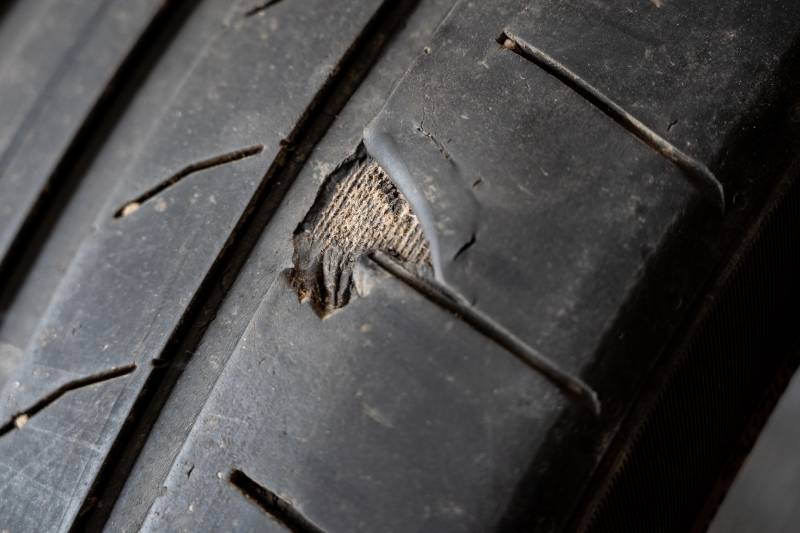
Checking your tyres for signs of wear and damage can tell you a lot about the condition of your tyres and how your vehicle is performing.
Understanding the different types of damage and tyre wear patterns that can occur will help you to identify issues and prevent problems before they get worse.
In this guide, we’ll explore the common types of van tyre wear and damage to look out for and what causes them, so you can keep your tyres in tiptop condition.
Common types of van tyre wear
It’s normal for tyres to gradually wear down over time, with wear evenly spread across the tyre’s surface. Uneven tyre wear, however, can be a sign of an underlying issue.
There are various types of uneven wear, including toe wear, outside edge tyre wear, camber wear, centre wear and more. Here, we’ll explore the most common two: outside edge tyre wear and centre wear.
Outside edge tyre wear
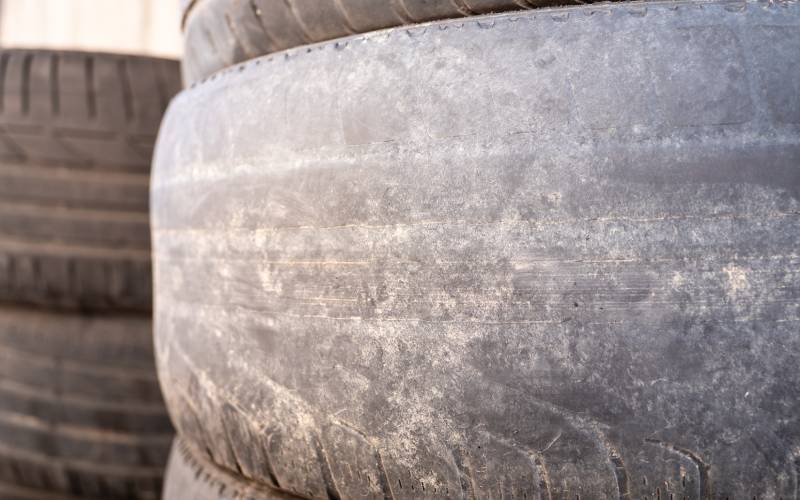
Outside edge tyre wear is a type of wear that impacts the outer edges of the tyre tread.
It can be caused by under-inflating or overloading your tyres so that the tyre shoulders flex and make contact with the road surface.
Under-inflated tyres get hotter than optimally inflated tyres. This excessive heat accelerates wear, increases rolling resistance and leads to higher fuel consumption. In severe cases, it can even result in tyre failure and sudden rapid deflation.
You should try to find the cause of under-inflation and resolve it. Start by checking the pressure, then look for any punctures, faulty valve caps or faulty valve stems.
Centre wear
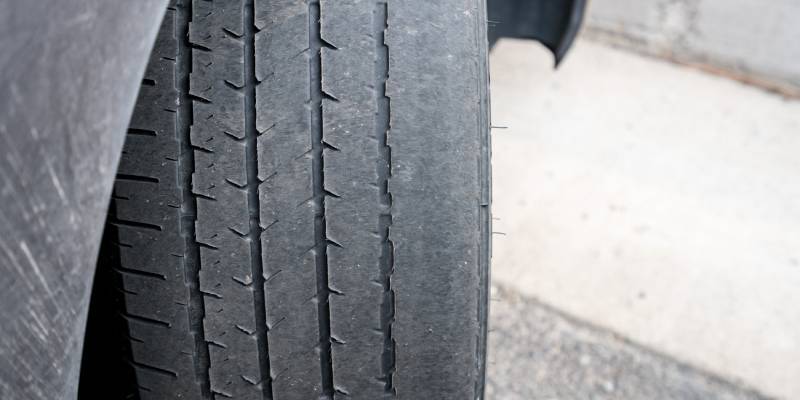
Centre wear is a type of tyre wear that impacts the centre of the tyre tread.
This tyre wear pattern is often caused by over-inflating your tyres so that the centre of the tyre carries the greatest load, and the shoulders are lifted slightly off of the road surface.
With less contact with the road, over-inflated tyres can reduce traction and as a result, impact handling and braking. They are also more susceptible to damage from potholes, kerbs and road defects because their stiffer structure is less able to absorb impact.
You can avoid centre wear by ensuring your tyres are optimally inflated. Check your tyre pressure when the tyres are cold and adjust the pressure to the correct levels using an accurate gauge.
Common types of van tyre damage
There are several types of tyre damage. Here we’ll explore the most common types of damage van tyres suffer from.
Bulges & blisters
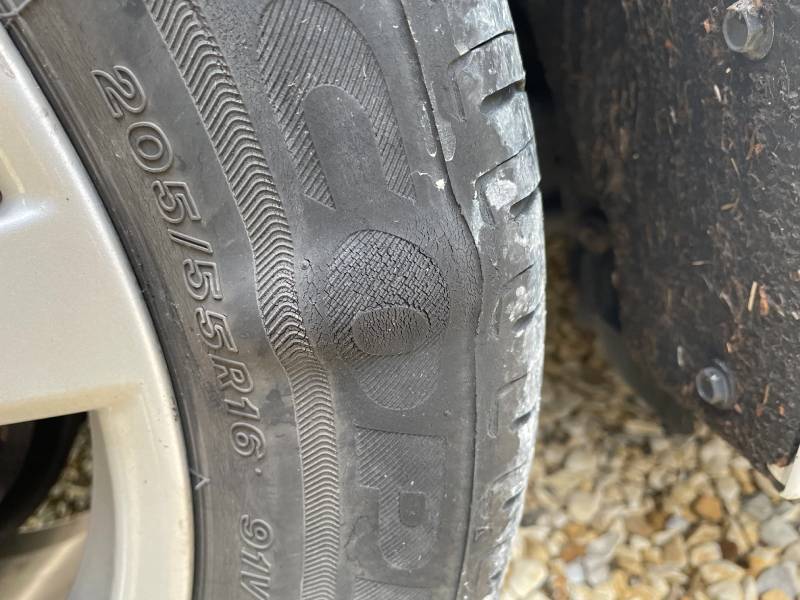
Bulges and blisters are deformities caused by an impact with an obstacle, such as a kerb, pothole, or stone. They can also occur when the sidewall is ‘pinched’ between an obstacle and the tyre rim.
Bulges and blisters form when one or more of the cords in the tyre casing rupture. As a result, tyres with this type of damage are weaker and
more at risk of blowouts or sudden failure.
This type of tyre damage is more likely to happen when your van tyres are under-inflated, or the van is overloaded.
Exposed cords
Exposed cords are a type of tyre damage that can occur due to cuts, punctures or wear to your van tyres.
This type of damage is characterised by the exposure of the steel or fabric layers in the tyres surface. If these internal layers are visible, your van tyres will be more susceptible to further damage and even blowouts.
It is unsafe and illegal to drive on tyres with exposed cords so you should head to the tyre specialist as soon as you notice this defect.
Top tip: When checking the sidewalls to inspect for damage, remember to make every effort to inspect the inner sidewall of the tyre as well as this may also be suffering damage.
Keep your van tyres road-ready with TyreSafe
Stay safe and road-ready with your handy guide to van tyre safety.
Download our handy guide to Van tyre safety (PDF, 500k)