Partnering Bodies: Dudley Council Trading Standards & TyreSafe
Scope: Multi-site retail assessment across 5 part-worn tyre traders (10 random tyre inspections per location + operational workflow analysis)
Overall Project Outcome: 100% Non-Compliance Rate (5 out of 5 Retailers Failed)
EXECUTIVE SUMMARY
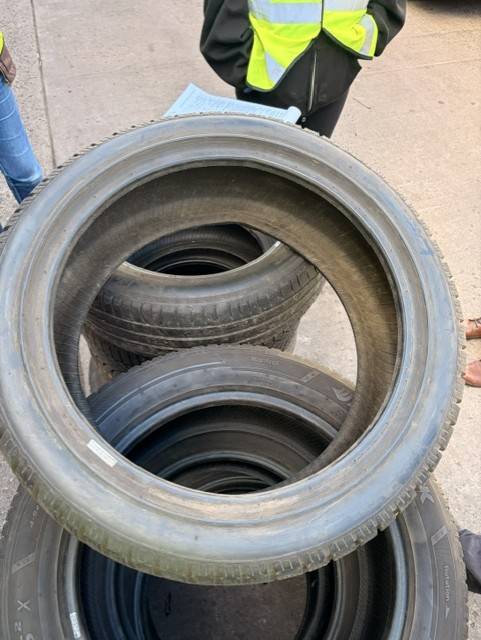
A joint operational exercise was conducted by Dudley Council Trading Standards officers accompanied by a TyreSafe technical expert, with support from West Midlands Police to maintain peace and site access. This targeted joint exercise evaluated five part-worn tyre retailers across the borough following a preliminary advisory visit where guidance and statutory requirements had been formally provided.
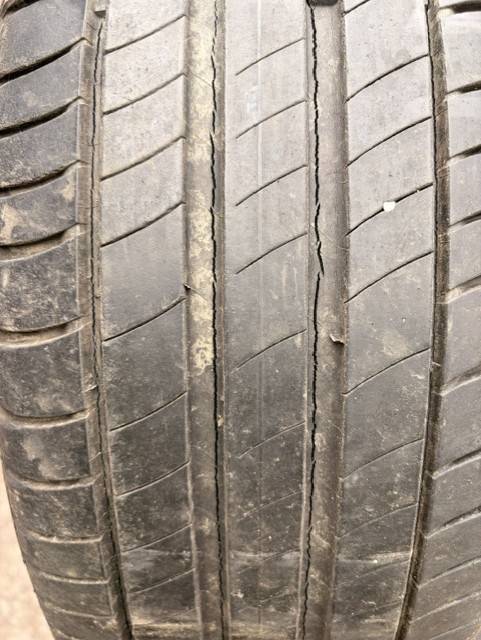
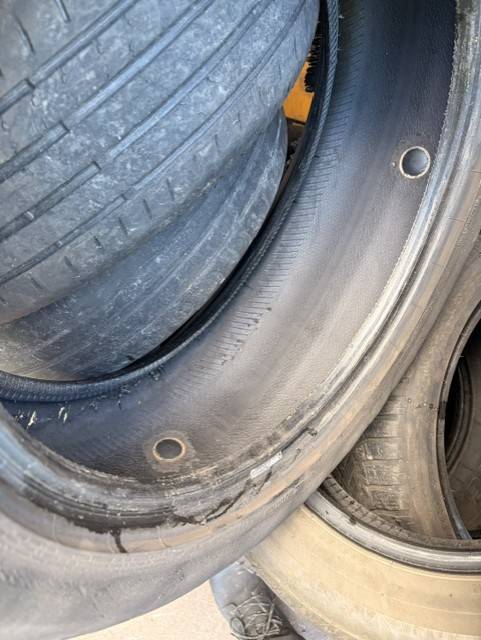
Despite prior educational intervention, all five retailers failed their assessments due to widespread, systemic non-compliance with product safety legislation. Key issues included illegal repairs, missing or temporary markings, structural damage, incorrect inflation testing, severely aged/vitrified rubber, and a general lack of due diligence.
This case study demonstrates the urgent necessity for proactive Trading Standards enforcement to protect budget-conscious motorists from purchasing hazardous, non-compliant tyres under the false assumption that they are safe and legal.
RETAILER FINDINGS & SUMMARY OF BREACHES
Retailer 1: Unsegregated Yard & Improper Markings
- Operational Environment: Yard stock was poorly managed with zero segregation between scrap tyres, returns, and stock for sale to the public. Budget new tyres and part-worn stock were intermingled inside.
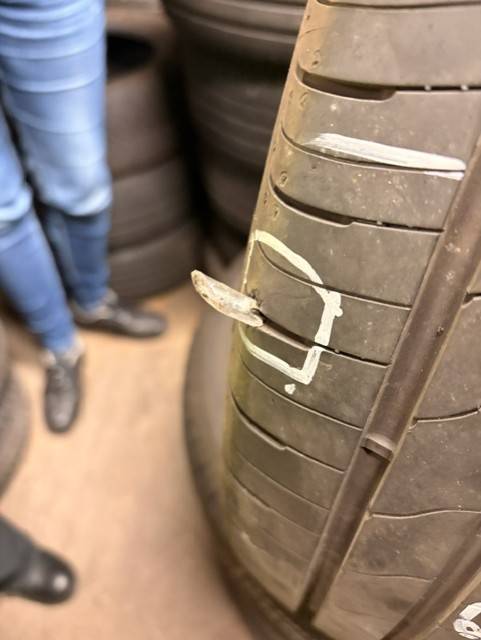
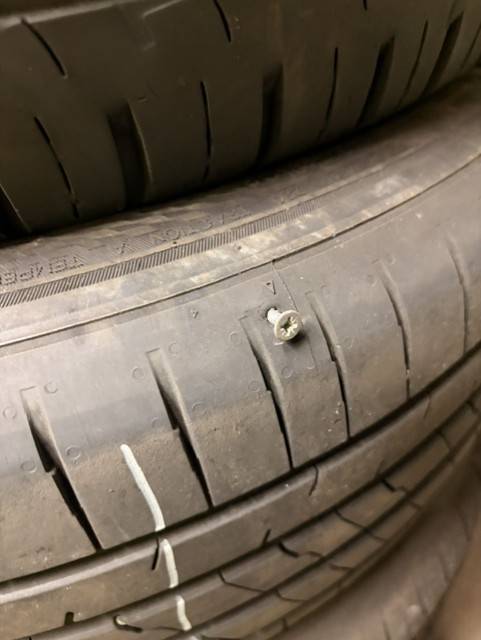
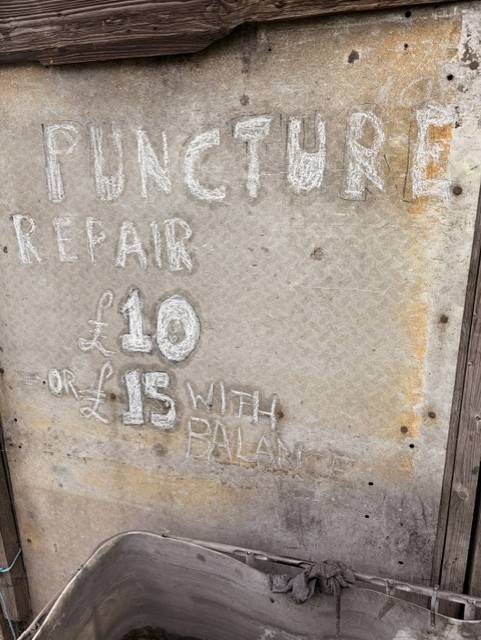
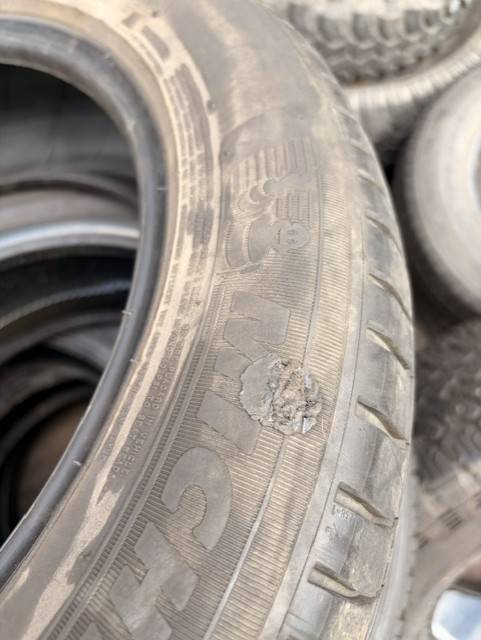
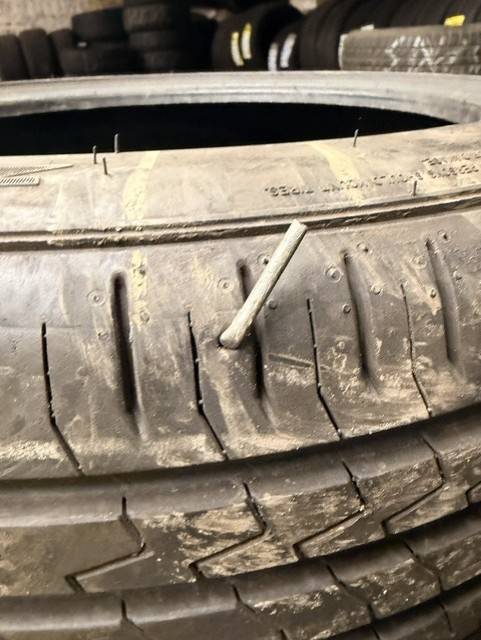
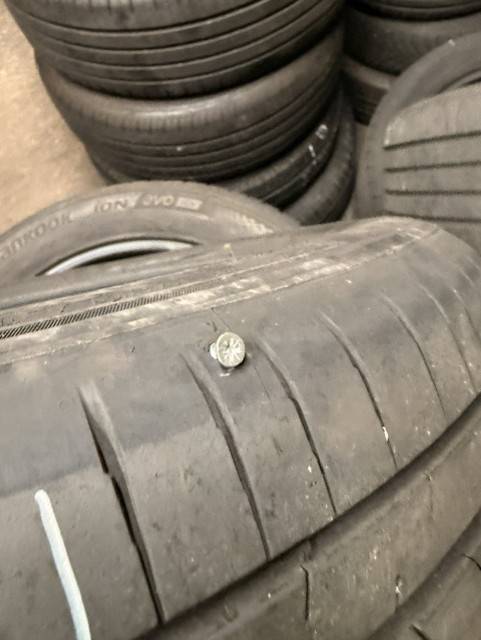
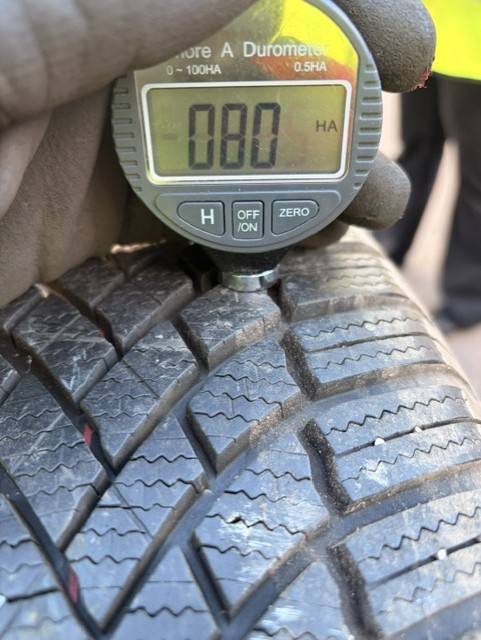
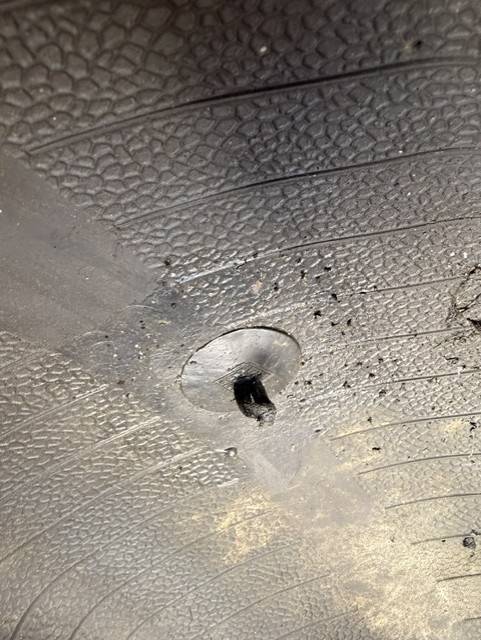
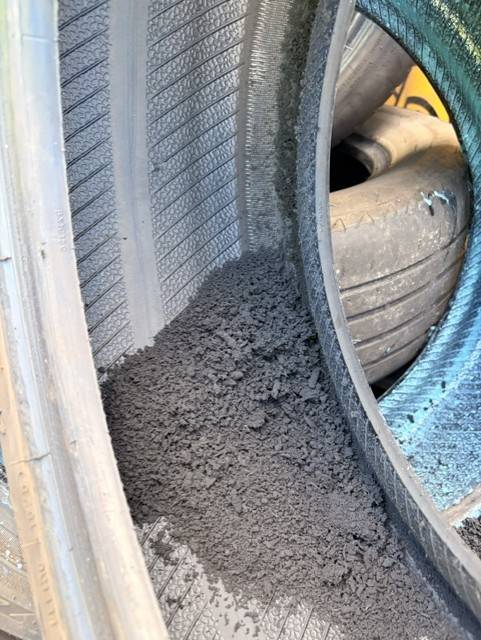
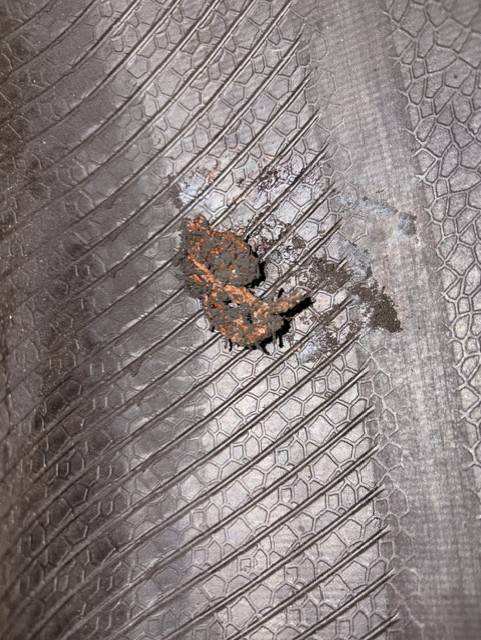
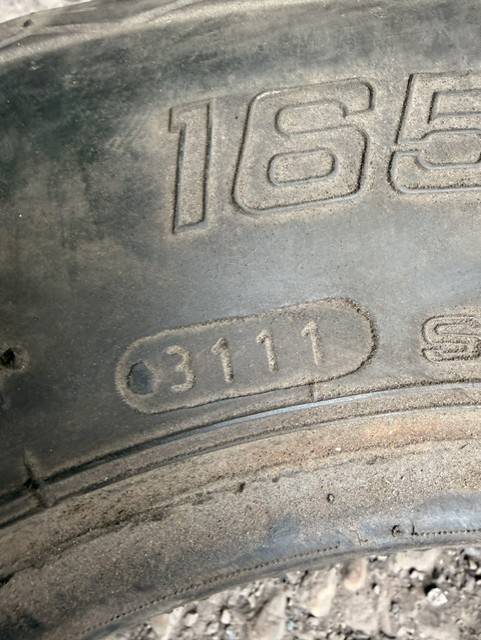
- Technical Findings: Piles of tyres held for puncture repairs contained non-repairable shoulder/sidewall punctures and previous non-compliant string repairs. Sample findings included a tyre with 3mm tread depth, a 15-year-old tyre (manufactured in 2011), and three tyres exhibiting high Shore hardness readings (72 Ha, 73 Ha, and 81 Ha), indicating severe rubber vitrification.
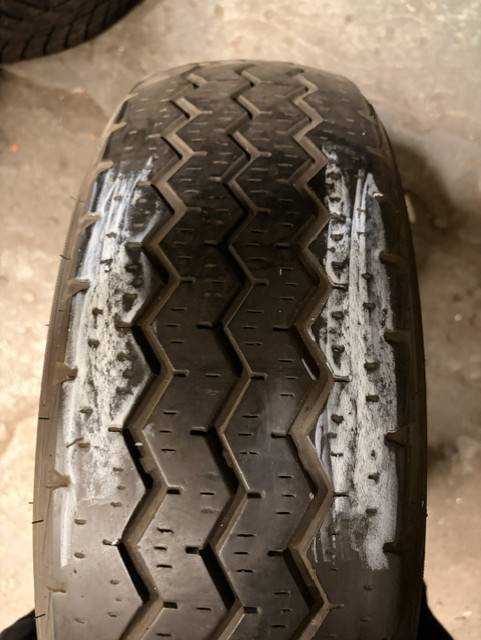
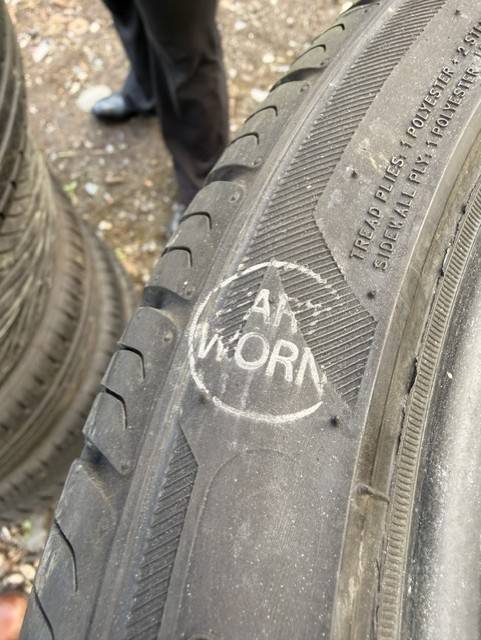
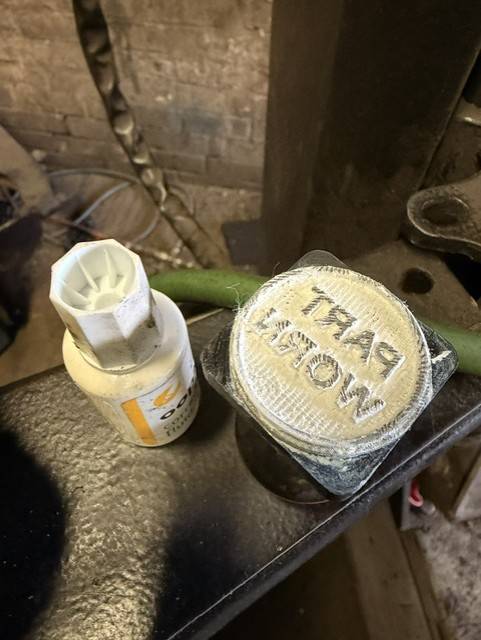
- Testing & Process: The owner admitted to guessing inflation pressures (35–65 psi) without knowing tyres have maximum cold inflation pressure limits stamped on the sidewall. Although a “PART-WORN” stamp was bought post-advisory visit, the trader used white correction fluid instead of permanent, indelible ink; the marking washed off during puncture bath testing.
- Verdict: NON-COMPLIANT
Retailer 2: Hand Car Wash Ancillary Business
- Operational Environment: Part-worn fitting service operated adjacent to a car wash. The owner (in business under 6 months) maintained a small storage area mixing budget new and part-worn tyres, alongside a clear scrap area outside.
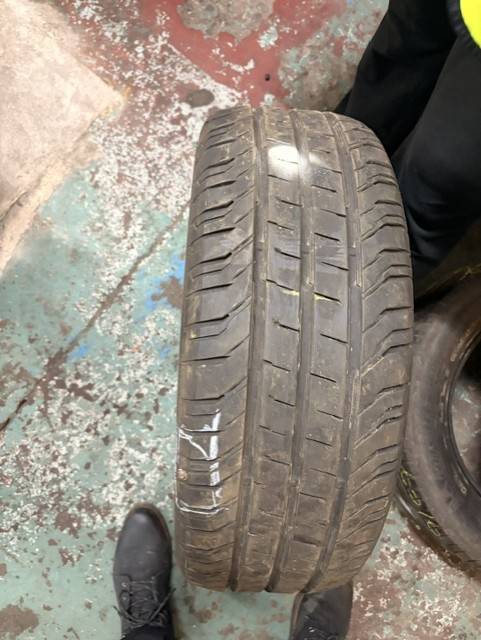
- Technical Findings: Tyre ages in the sample spanned 2013 to 2022. Several tyres had previous string repairs, one had major sidewall damage rendering it unfit for sale, one showed age-related cracking, and another lacked visible speed and load index markings. Shore hardness readings on two tyres reached 72 Ha and 77 Ha.
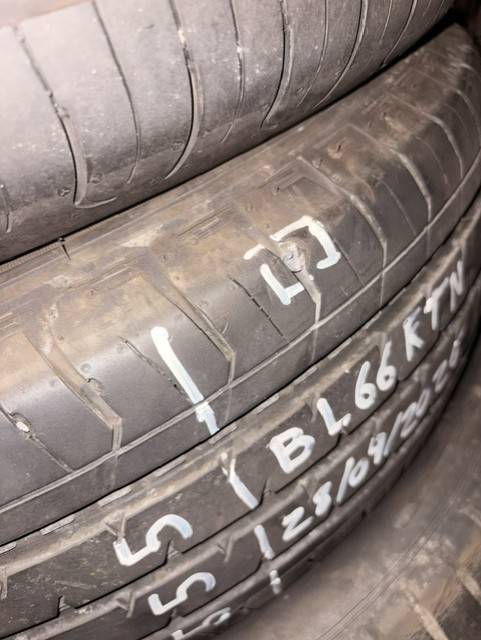
- Testing & Process: The owner relied entirely on a white paint spot applied by their wholesaler as “proof” of compliance. The owner did not possess a “PART-WORN” stamp, was oblivious to the legal requirement, and had no understanding of inflation testing protocols.
- Verdict: NON-COMPLIANT (Trader expressed intent to transition exclusively to budget new tyres)
Retailer 3: Large Main Road Retail Plot
- Operational Environment: High-volume facility run by a qualified MOT tester who claimed to sell part-worn tyres reluctantly to meet local consumer demand. Racking was partially open to the elements.
- Technical Findings: Ages ranged from 2017 to 2024. Punctures in non-repairable shoulder areas or historic string repairs were identified on 3 of 10 tyres. One tyre had all sidewall markings (including speed and load index) completely rubbed off. Shore hardness readings reached 74 Ha and 84 Ha.
- Testing & Process: Tyres were racked directly on arrival without prior inspection, making them available for sale before evaluation. The trader claimed stamp vendors were impossible to find online—a claim immediately disproved when inspectors located multiple suppliers via a standard web search in seconds.
- Verdict: NON-COMPLIANT
Retailer 4: Large Outdoor Yard
- Operational Environment: Large outdoor yard containing hundreds of part-worn tyres stacked open to the elements and collecting rainwater.
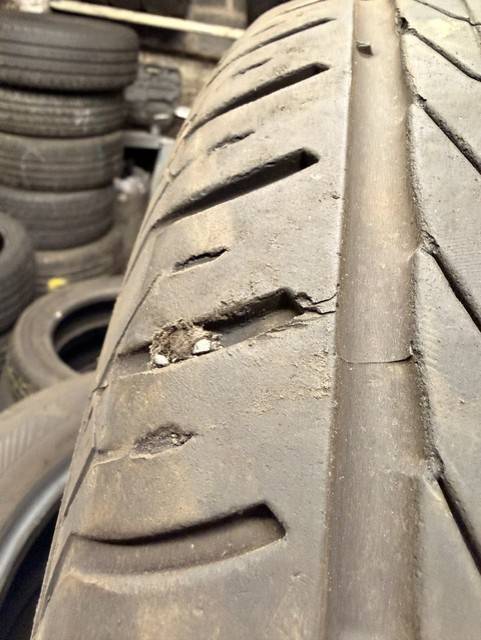
- Technical Findings: While stock was generally newer (only one tyre pre-dated 2022), 8 out of 10 sampled tyres contained non-repairable shoulder punctures or historic string repairs. One tyre in stock was previously sold and stamped as a part-worn by another business.
- Testing & Process: Sorting was based solely on size without basic visual inspections for damage. Although the business owned a stamp and indelible ink, observations of vehicles departing the premises indicated they were not being applied. The owner’s defence that defective tyres would be “scrapped at point of fitment” was invalidated by exposing non-compliant stock for sale.
- Verdict: NON-COMPLIANT
Retailer 5: Multi-Bay Professional Fitting Centre
- Operational Environment: Modern, professional operation featuring multiple fitting bays, ramps, tyre racking, modern machinery, and three technicians on site.
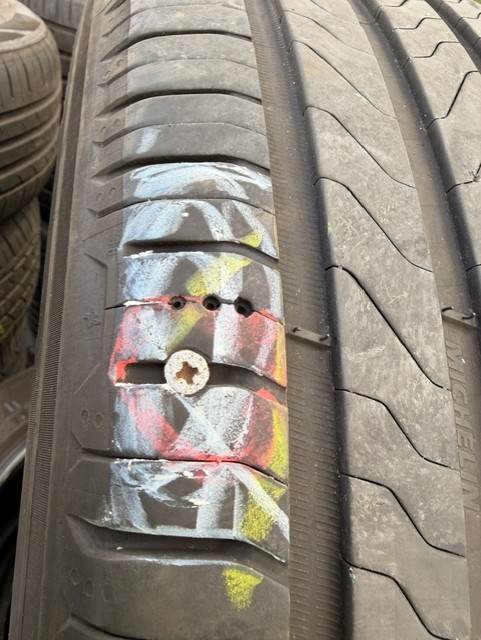
- Technical Findings: Ages included a 2012 tyre. 7 out of 10 tyres had visible sidewall punctures or string repairs. One tyre failed the mandatory 2.0mm tread depth requirement across its breadth.
- Testing & Process: Like Retailer 2, staff relied on white paint spots applied by their wholesale supplier, assuming liability and pre-inspection sat with the supplier. Upon inspector identification, non-compliant tyres were immediately moved to the returns pile.
- Verdict: NON-COMPLIANT
LEGISLATIVE FRAMEWORK & SYSTEMIC BREACHES
Primary Consumer Safety Legislation
-
The Motor Vehicle Tyres (Safety) Regulations 1994 (SI 1994/3117) [Reg. 7]
-
- Marking Requirement: Permanent “PART-WORN” marking (minimum 4mm height, in indelible ink or branded).
-
- Structural Requirement: Structural integrity maintained (no cuts exceeding 25mm, bulges, tears, or exposed cords).
-
- Tread Depth Requirement: Minimum tread depth of 2.0mm across the entire breadth of tread.
-
- Testing Requirement: Pre-sale inflation testing completed.
-
- Repair Requirement: All repairs fully compliant with BS AU 159.
-
Consumer Protection Act 1987 (CPA 1987)
-
- Offence to supply, offer to supply, expose for supply, or possess for supply unsafe consumer goods.
-
General Product Safety Regulations 2005 (GPSR)
-
- Imposes a general safety requirement for consumer products, covering issues like severe rubber degradation and aged, vitrified rubber compounds.
Detailed Statutory Analysis
-
Possession & Exposure for Supply
- Legislation: Regulation 7(1) of The Motor Vehicle Tyres (Safety) Regulations 1994 & Section 12 of the Consumer Protection Act 1987.
- Statutory Interpretation: Under Regulation 3(6), “supply” explicitly includes offering to supply, agreeing to supply, exposing for supply, or possessing for supply.
- Breach Identified: Traders routinely claimed that non-compliant tyres racked or stacked in sales areas would be “scrapped at point of fitment.” Legally, holding unsegregated, defective stock in a commercial trade area creates the legal presumption that it is possessed for supply.
-
Illegal & Non-Compliant Repairs
- Legislation: Regulation 7(2) of The Motor Vehicle Tyres (Safety) Regulations 1994 & BS AU 159 (Specification for Repairs to Tyres for Motor Vehicles used on the Public Highway).
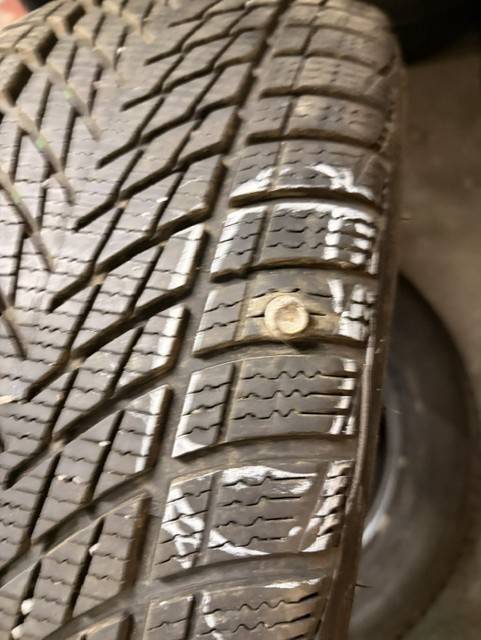
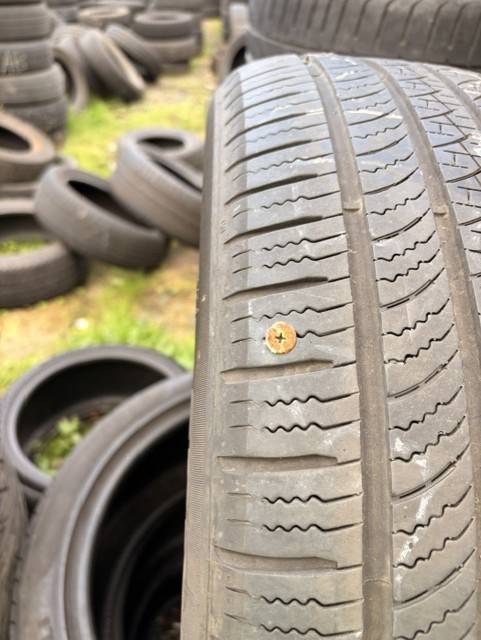
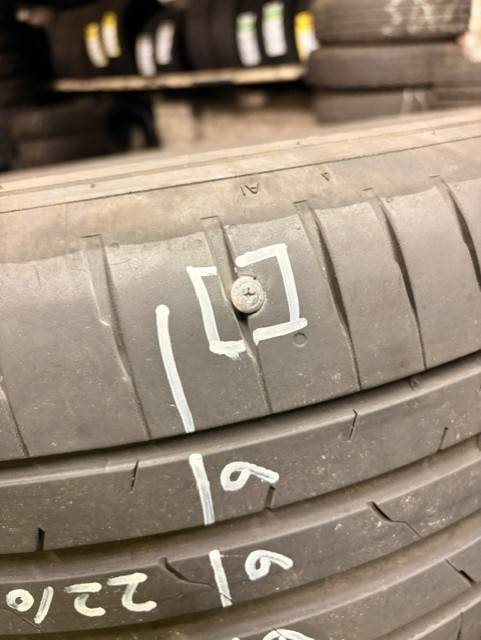
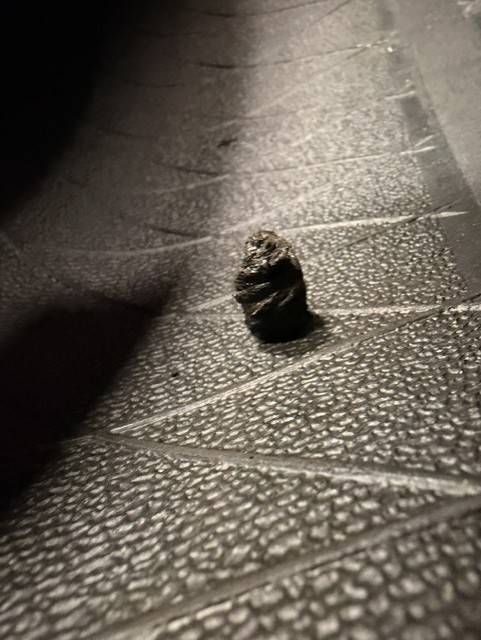
- Breach Identified: Across all 5 retailers, string/strip repairs inserted externally without removing the tyre were widespread. BS AU 159 strictly prohibits temporary string repairs for road use; repairs must use a vulcanised combination stem-and-patch inserted internally. Furthermore, punctures located in the shoulder or sidewall zones (outside the central tread repair zone) were routinely found in sale stock.
-
Missing or Temporary “PART-WORN” Markings
- Legislation: Regulation 7(1)(e) & 7(3)(e) of The Motor Vehicle Tyres (Safety) Regulations 1994.
- Breach Identified: The law mandates that part-worn tyres must be permanently and legibly marked with uppercase letters at least 4mm high reading “PART-WORN” adjacent to the E-mark. Retailers routinely lacked stamps, relied on wholesale paint dots, or used non-permanent correction fluid that washed off in test tanks.
-
Structural Defects, Wear & Rubber Hardness
- Legislation: Regulation 7(2) (Structural integrity & 2.0mm tread depth) & General Product Safety Regulations 2005.
- Breach Identified: Retailers exposed tyres with under 2.0mm tread, sidewall damage, and missing speed/load indexes. Shore hardness testing revealed vitrified rubber readings as high as 84 Ha (compared to standard new tyre flexibility of 60–65 Ha), indicating severely oxidized, brittle rubber prone to sudden loss of wet grip or carcass breakdown.
KEY THEMES & OPERATIONAL LEARNINGS
Critical Market Failure Patterns
- Over-Reliance on Wholesalers: Retailers routinely assumed supplier check marks (e.g., white paint spots) absolved them of liability. Legally, the retail business exposing the product to the consumer bears strict legal responsibility.
- Misunderstanding of Possession for Supply: Racking uninspected tyres exposes the business to immediate criminal liability under consumer safety laws.
- Flawed Due Diligence: Relying on post-sale checks or non-compliant tools (such as white correction fluid) fails to satisfy legal due diligence standards.
- Consumer Vulnerability & False Economy: Motorists seeking a “cheap fix” to pass an MOT are generally unaware of part-worn regulations. They rely entirely on the retailer’s professional duty of care—a duty that was systematically absent across all sampled sites.
CALL TO ACTION FOR LOCAL AUTHORITIES
This joint exercise highlights a significant public safety issue: 100% of the targeted traders were actively possessing or offering dangerous, non-compliant tyres for sale despite prior educational visits. Educational guidance alone is insufficient to modify trader behaviour in this sector.
Enforcement Protocol for Trading Standards Teams
Local authorities execute a graduated enforcement approach:
- Written Warning & Compliance Advice: Issued for minor administrative omissions during initial contact.
- Suspension Notice (CRA 2015): Served under Schedule 5 of the Consumer Rights Act 2015 to temporarily prohibit the supply of uninspected or non-compliant stock.
- Seizure & Forfeiture: Statutory powers used to confiscate illegal tyres (e.g., string-repaired or un-stamped tyres) as physical evidence.
- Formal Prosecution (CPA 1987): Pursued under the Consumer Protection Act 1987 where gross negligence or repeat non-compliance is identified, carrying unlimited fines and potential custodial sentences.
TyreSafe urges all UK Local Authority Trading Standards services to integrate proactive, unannounced part-worn tyre enforcement visits into their regular regional safety sampling plans.