TyreSafe calls for behaviour change as new data reveals ‘action gap’ among motorists
TyreSafe is calling on UK drivers to shift from reactive to preventative behaviour, as new research reveals that motorists are far more likely to respond emotionally than practically after a near-miss.
Following a “heart-in-mouth” moment:
- 23% of drivers shouted, gestured or sounded their horn
- Only 11% checked their tyres
- 22% did nothing at all and continued driving
This pattern is consistent across the UK, pointing to a widespread “action gap” where drivers fail to take simple steps that could improve safety.
Stuart Lovatt, Chair of TyreSafe, said, “A near-miss should be a warning sign—but too often it becomes a moment of frustration rather than reflection.
“Checking your tyres takes minutes, but it can make a critical difference in preventing the next incident. We need to move from reacting in the moment to acting in advance.”
TyreSafe is encouraging all drivers to use near-miss experiences as a prompt to check their vehicle and ensure it is roadworthy.
Call to action:
Turn a scare into a safety check.
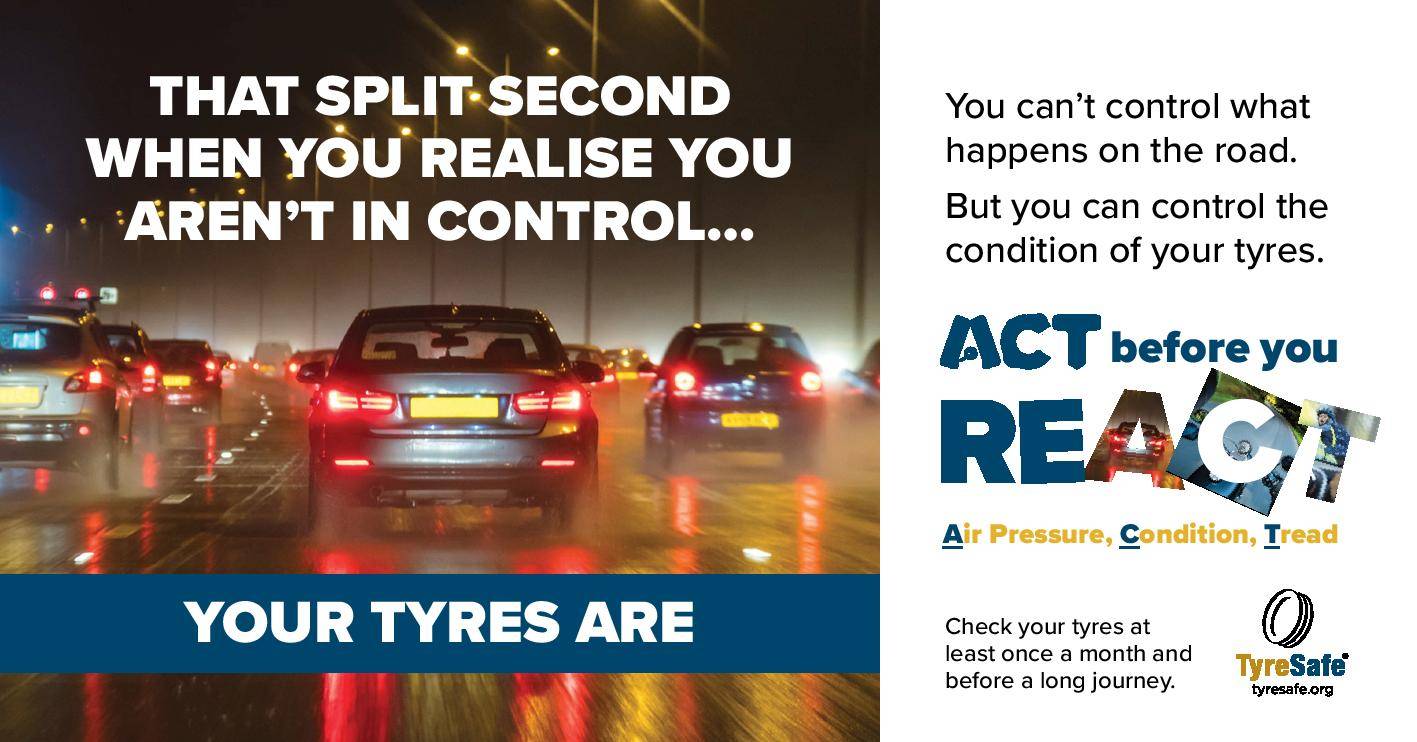
ACT before you REact.
What does ACT mean?
TyreSafe is encouraging road users to remember the ACT checks:
A – Air Pressure
Road users should check their tyre pressures at least once a month and before long journeys using an accurate gauge. Correct tyre pressures help optimise braking performance, fuel efficiency and tyre life, while reducing the risk of tyre failure.
C – Condition
Tyres should be regularly inspected for cuts, cracks, bulges and embedded objects. Any visible damage should be assessed by a tyre professional immediately, as it may indicate underlying structural issues.
T – Tread
For passenger cars, the legal minimum tread depth in the UK is 1.6mm across the central three-quarters of the tyre around its entire circumference. Sufficient tread depth is particularly important on rural roads, where standing water and uneven surfaces can significantly increase the risk of aquaplaning and loss of control.